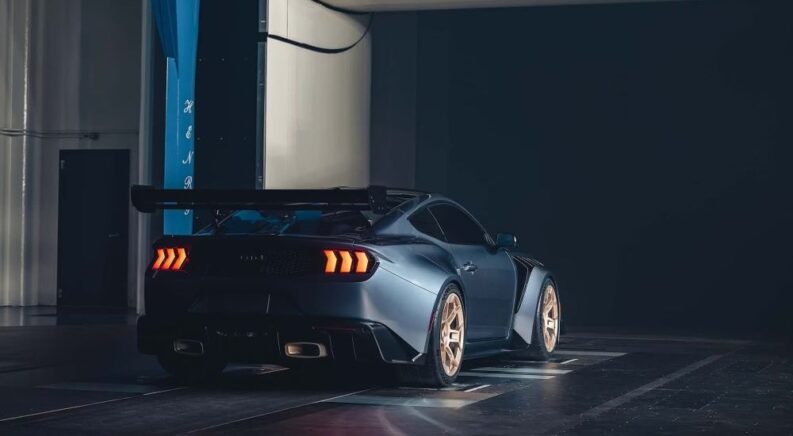
When American bard William Martin Joel said, “Only the good die young,” he certainly wasn’t referring to the Ford Mustang. While many of the Mustang’s early muscle car contemporaries burned bright upon their debut, they flamed out just as quickly as changing regulations, tastes, and technology rocked the sporty segment. The Mustang is a notable exception to this unfortunate trend, with 2025 marking the coupe’s 60th year on the market. How has the Mustang managed not only to survive but also to thrive in an ultra-competitive industry? It all comes down to Ford’s ability to roll with the punches and embrace new technology while still ensuring that the Mustang retains its fundamental appeal as an affordable yet exciting muscle car.
There’s no questioning the performance resume of the modern Mustang, especially the rarefied GTD model. The high-performance, 815-hp variant just bested the Porsche 911 GT3 RS at the “Top Gear” test track in late 2025, logging a 1:13.7-second lap time that goes a long way towards justifying the car’s price tag of over $300,000. While the more accessible model can’t match that sort of speed, drivers won’t experience many dull moments behind the wheel when selecting a Ford Mustang for sale, with even the pokiest 2026 model offering a zero-to-60-mph time of 4.5 seconds. The Mustang’s GT trim shaves that number down to 4.2 seconds, and the range-topping Dark Horse clocks in even quicker at 4.1 seconds. Those are some compelling stats by any measure, and prove that Ford hasn’t lost the plot when it comes to the muscle car’s core principles. As we await the next iteration of the iconic muscle car, we thought it would be a good time to track the Mustang’s evolution and see how a commitment to continual improvement has kept Ford’s most famous model at the top of its game for six decades and counting.
1960s: Pony Cars Get Their Call to the Post
In the mid-20th century, youth culture and car culture were virtually inseparable. A teen’s first car wasn’t just a way to get to school or a summer job in the early 1960s. It was a symbol of independence that gave kids a place to call their own. Decades before smartphones and social media hit the scene, cars offered teens an easy way to connect. Whether meeting up with friends at drive-in movies and diners, cruising the main drag, or ending the night at Lover’s Lane, cars were nothing less than a ticket to freedom.
They were also affordable, and therefore abundant. General postwar prosperity enabled teenagers to easily finance their own vehicles through part-time jobs or summer employment, setting the stage for the emergence of the hot rodding and drag racing culture. This automotive era has been captured in films such as Rebel Without a Cause, American Graffiti, and Grease, which were quickly commodified by an auto industry powered by such trends. Hot rods and custom rides became a unique expression of individuality, but not every driver had the time, interest, or mechanical ability required to craft their own one-of-one automotive creation.
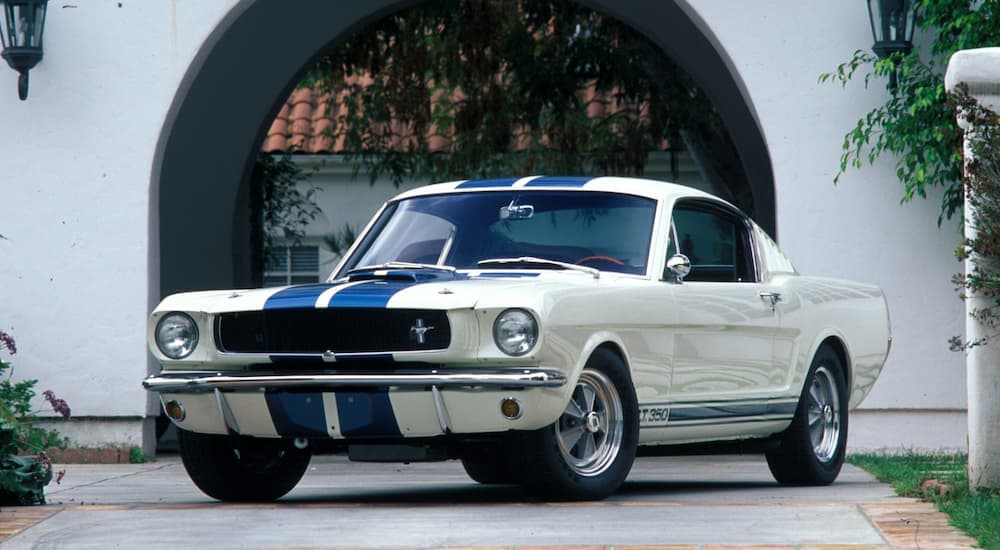
Enter the muscle car. Designed to provide hot rod performance straight from the factory, early models like the Pontiac GTO generally followed a standard formula, equipping midsize models with hearty V8 powertrains that were ready to race for pink slips. While exciting, these muscle cars weren’t the most affordable option on the market. Thrill-seeking drivers wouldn’t have to wait too long for a lower-priced option. The Ford Mustang essentially created the pony car segment when it hit the streets in mid-1964, offering buyers a more affordable, compact option that still prioritized performance. Ford leveraged the existing Falcon platform and relied on shared components to keep the Mustang’s MSRP within the range of the average driver. While a brawny V8 was the Mustang’s main selling point, entry-level trims could also be optioned with a thrifty I-6 design.
The original Mustang wasn’t just fast. It also looked speedy, thanks to its long hood/short deck design, as well as its aggressive stance. The car’s customization potential was another major selling point, giving drivers the opportunity to enjoy all the benefits of the hot rod scene’s DIY approach while expending a little less elbow grease. The muscle and pony car segments continued to enjoy substantial growth throughout the late 1960s, with the Chevy Camaro, Dodge Charger, Plymouth Barracuda, and Mercury Cougar all joining the segment within a few short years.
1970s: Adapt or Go Extinct
Unfortunately, changing economic and regulatory conditions would see muscle and pony cars face an uphill journey as America rolled into the 1970s. Rising insurance costs, the OPEC oil embargo, and strict emissions regulations included in the Clean Air Act would see automakers make some fundamental changes to the pony car formula. If the Mustang wanted to survive, it would need to adapt.
The sequel often fails to live up to the original, and that was certainly the case with the Mustang II. Based on the much-maligned Pinto, the second-generation Mustang adopted an economical approach that was less than impressive when compared to the high-horsepower models of the 1960s. In fairness, it’s tough to blame Ford for the lackluster second-generation model. It was simply a product of the times. The 70s and early 80s are referred to as the auto industry’s “Malaise Era,” characterized by brands struggling to meet new efficiency, environmental, and safety requirements.
Debuting two months before the start of the 1973 oil crisis, the Mustang II had already made some substantial efficiency-related changes as Ford faced increased competition from a new generation of economical imports from Datsun and Toyota. The pony car was still available with a 4.9L V8, but most models relied on a 2.8L V6 or the 2.4L I-4 from the compact Pinto. The new Mustang was smaller, but it was also heavier thanks to the added equipment required to meet new safety and emissions standards.
While it might have failed to live up to the high bar set by the original, the Mustang II was actually something of a commercial success, logging almost 400,000 sales in its first year on the market and landing Motor Trend’s 1974 Car of the Year award. Drivers weren’t exactly elbowing each other out of the way to get behind the wheel of the second-generation Mustang, but the model does serve an important role in the pony car’s past. If not for the relatively underwhelming Mustang II, the badge might have gone extinct by the mid-1970s. That was the fate that befell the Plymouth Barracuda, the Chevy Chevelle SS, the Pontiac GTO, and other iconic, muscle-bound models, which all met their end during this decade.
1980s: New Tech Brings New Performance Potential
The 1980s saw the Mustang ditch the Pinto platform for a foxy new body that would see the pony car reestablish its reputation as a fashion icon. Introduced with the debut of the third-generation model in 1979, the Fox body saw the Mustang gain a larger wheelbase that increased the size of the car’s interior, trunk, and engine bay. Despite the improved dimensions under the hood, the Mustang would keep the same engine lineup as the second-generation model, although the 2.8L V6 would later mature into a 3.8L model. The Mustang continued to offer a compelling V8 option, although it would also receive an upgrade as it was replaced by a high-output version in 1982.
While the new Fox body Mustang was certainly a highlight, Ford’s decision to adopt new electronic fuel injection (EFI) technology would really mark the most important advancement as the pony car cruised through the 1980s. Carburetors date back to the mid-1800s, and while they were an ingenious solution that provided early engines with a healthy mix of air and fuel to power the internal combustion process, the design was a bit dated by the time the 1980s rolled around. The Mustang, like many models of the era, adopted new EFI technology, notable for its ability to deliver the optimal fuel-to-air ratio without the waste and carbon emissions associated with carburetors. EFIs also offer some notable performance benefits, resulting in a smoother driving experience that includes easy starts and the ability to adapt to changing temperatures and elevations automatically.
1990s: Make Way for the Modular V8
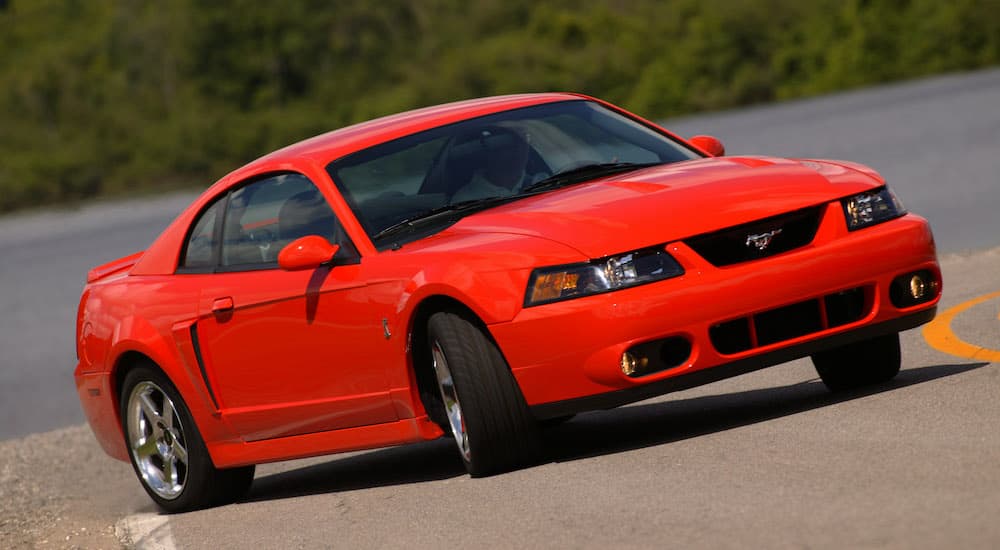
The Mustang has long relied on its pure power, but an increasingly competitive performance saw the original pony car lose one of its key advantages as the auto industry cruised into the 1990s. A new era of engine technology saw Ford face increased competition from European and Japanese competitors, who had quickly developed a reputation for producing smooth, reliable powertrains that the Mustang’s dated 5.0L pushrod V8 just couldn’t match. That’s where the Modular V8 comes in. Introduced in the 1996 model, the 4.6L V8 used an overhead camshaft (OHC) architecture to create a lighter, faster, more responsive engine that’s optimized for longevity and low emissions.
While it lacks the low-end torque of the pushrod design, the new Modular engine allowed the Mustang to evolve from a pure speedster into a more refined ride that still knew how to get your blood pumping. The new engine also improved overall ride quality and reliability, making the Mustang a more practical option for those seeking a dynamic daily driver. The new engine also enhanced the Mustang’s safety credentials with improved crash structures and weight distribution, providing drivers with an increased sense of confidence when they step behind the wheel.
The fourth-generation Mustang could have looked a lot different if not for a coordinated campaign by longtime fans of the iconic pony car. Slumping sales prompted Ford to consider a new Mustang based on the Mazda MX-6, which would have featured a front-wheel drive layout and no V8 option. Buyers blanched, and the Mazda-inspired Mustang was instead released as the new Ford Probe in 1989.
2000s: Carrying the RWD Torch
The auto industry had changed dramatically by the time the Mustang rolled into the 2000s. Shifting tastes saw drivers flock to crossover SUVs and performance sedans, leaving the muscle car segment grappling with an identity crisis. Remaining muscle cars either rode off into the sunset or ditched their classic rear-wheel drive layout for a new FWD format. It might not sound like a drastic shift, but FWD models simply fall short of their RWD counterparts in a few key areas. The RWD setup offers improved weight distribution and sporty handling, and tends to carry a little more credibility among the muscle car set. The Chevy Impala was one notable FWD convert, while the Chevy Monte Carlo, Pontiac Grand Am, and Mercury Cougar all disappeared entirely. That left the Mustang with only two true RWD competitors in the Chevy Camaro and Dodge Challenger, the latter of which returned to the market in 2008 after a 25-year hiatus.
Instead of trying to update the Mustang for the modern era, Ford decided to double down on the coupe’s old-school appeal. Introduced in 2005, the fifth-generation Mustang was designed to honor the classic fastback models of the late 1960s while incorporating some key upgrades. This retro-futuristic approach gave us the S197 Mustang, featuring an upright grille, triple-bar taillights, a fastback roofline, and stately, squared-off proportions. Hiding beneath this vintage exterior was a host of modern tech, including an improved suspension, safety components, and a stiffer chassis that noticeably improved the Mustang’s handling. Like the Modular engine introduced in the 1990s, these enhancements made the Mustang a more practical everyday option while still offering the eye-catching style and performance potential that has long defined the badge. Speaking of performance, Ford also reintroduced the Shelby GT500 model in 2007, which was powered by a 500-hp V8 engine, a 412-hp Coyote V8, and, in 2012, a 444-hp Mustang Boss 302. In 2012, Ford rolled out a new and improved 5.8L supercharged V8 capable of producing 662 hp for the Shelby GT500.
2010s: The Advantages of Independence (and Turbochargers)
The automotive arms race intensified further in 2010, as new technology and shifting driver preferences continued to shape the market. The Mustang managed to remain relevant without losing its core identity, but it did make a few important concessions in an effort to enhance the muscle car’s appeal on the international market. While previous models had been begrudgingly adapted to meet worldwide safety and emissions standards, the sixth-generation Mustang was designed to be a globetrotter from day one. Two key technologies underscored this new ethos, starting with the Mustang’s independent rear suspension (IRS).
A solid rear axle has a number of advantages when it comes to straight-line acceleration, but it doesn’t provide the most sophisticated handling experience when you’re sitting in the driver’s seat. The solid rear axle had served the Mustang well for much of its history, but 21st-century drivers are accustomed to the improved ride quality, handling, and stability that an IRS can deliver. The new rear suspension allowed the Mustang to better compete with its European contemporaries.
That was just one part of the muscle car’s philosophical shift. The other notable headline for the 2010s-era Mustang is the introduction of a new turbocharged four-cylinder engine. Ford’s 2.3L EcoBoost engine might seem a little undersized for the iconic pony car, but a little forced induction allows the modest motor to produce up to 330 hp while still offering up to 32 MPG on the highway. The EcoBoost-equipped Mustang wasn’t only cheaper to operate. It was more affordable from the outset, broadening the car’s appeal with an accessible MSRP that allowed every driver to experience the legendary model. Those who prefer a traditional V8 could still access the 435-hp Coyote V8. While Ford continued to offer a six-speed manual, drivers could enjoy the same level of control with a little extra convenience by opting for the six-speed automatic with integrated paddle shifters.
2020s: A Mustang for the Digital Era
The Mustang’s own digital revolution began in the early 2000s, but advanced automotive, infotainment, and convenience technology have continued to find their way into the Mustang in the years since. Introduced in 2024, the current seventh-generation Mustang is as sophisticated as any other contemporary vehicle, featuring an available 13.2-inch infotainment display, a 12.4-inch digital instrument cluster, Apple CarPlay and Android Auto smartphone connectivity, and a Ford Power-Up software platform designed to deliver seamless over-the-air software updates. We all know that there can be a downside to having too many digital distractions, but Ford has taken a refreshingly restrained approach, focusing on upgrades designed to enhance the overall driving experience while creating a closer connection between the vehicle and the operator.
One of the best examples of the Mustang’s ability to leverage modern automotive tech would have to be the car’s customization potential. The 13.2-inch infotainment display enables owners to fine-tune a wide range of settings, from custom steering, suspension, and exhaust configurations to dedicated drive modes that unlock the Mustang’s full performance potential. Drivers can select between Normal, Sport, and Comfort Steering modes while the suspension can be turned with Normal, Sport, Track, and Drag options. The exhaust system offers similar settings, but also offers a handy Quiet mode that ensures you won’t wake the neighbors by roaring out of the driveway at 7 AM. The Mustang also offers six selectable drive modes that allow the muscle car to shift between different applications, thanks to Normal, Sport, Slippery, Track, Drag Strip, and Custom settings.
The modern Mustang still features a hardy V8 option and, unlike much of the segment, has managed to evade the widespread electrification trend. The Mustang lost two of its last V8 competitors when the Dodge Challenger and Chevy Camaro left the market in 2023 and 2024. While Dodge introduced the all-electric Charger Daytona in 2024, the Mustang is one of the last models of its kind in the muscle car segment. It’s worth noting that while Ford does technically offer an EV bearing the famous name, the electric model is a Mustang in name only. Debuting in 2021, the Mustang Mach-E is a compact crossover that, while sporty, does lack the true performance potential of its muscle car namesake.
Looking Down the Road
A gas-powered, rear-wheel drive model sporting a powerful V8 and a manual transmission is nothing less than an act of defiance in today’s auto industry. As other automakers abandoned gas-powered performance models in favor of new hybrid and EV options, Ford is sticking to a familiar formula while steadily integrating some compelling new tech. The Mustang might not be as ubiquitous as it once was. While new EV options can certainly match the model’s prodigious output, few vehicles can compete with the heritage and historic, high-performance apparel of Ford’s signature sports car. The Mustang wears its more anachronistic elements like a badge of honor, proudly producing a throaty V8 growl and bridging the gap between the automotive past and present. Ford’s muscle car is bound to see some changes as changing regulations and trends continue to shape the industry, but if the last 60 years have taught us anything, it’s that the Mustang will always come out on top.