Along with brands such as Mitsubishi, Toyota, and Ford, the Subaru name has long been synonymous with rally racing. First popularized in Europe, this unique form of point-to-point racing requires vehicles that work equally well on paved, dirt, and even snowy surfaces. It was a natural fit for Subaru, and with numerous championships and wins, Subaru is one of the most famous rally names around.
But the question has arisen: should people still consider Subaru a rally brand? As I write this, it’s been over 17 years since Subaru’s shocking exit from the FIA World Rally Championship (WRC). In 2025, commercial U.S. sales of the Subaru WRX, long the company’s official rally chassis, plunged to less than 11,000 cars. That’s more than a 65% decline in eight years, and it represents just 1.7% of Subaru’s total vehicle sales. Obviously, the optics aren’t great. Is everything as it seems, though? Let’s peel back the layers to get to the bottom of Subaru’s past, present, and future in rally racing.
A WRC Shooting Star
For nearly 20 years, Subaru was one of the most identifiable and successful WRC teams. Subaru did endurance event work after WRC was founded in 1973 and partnered with Subaru Rally Team Japan in the 1980s, but success was limited. In almost 10 years of competition, the original team had only one podium finish.
The formation of the Subaru World Rally Team in September 1989 kicked the automaker into the rally stratosphere. First using the Subaru Legacy LS chassis and later the Subaru Impreza WRX, legendary drivers such as the late Colin McRae, Carlos Sainz, Petter Solberg, and Richard Burns drove Subaru vehicles to three drivers’ championships and three manufacturers’ titles. Just as importantly, the cars were instantly recognizable by their blue-and-yellow paint scheme.
Suddenly, though, Subaru was gone. Less than a week after the 2008 season finale, and having already submitted entries for 2009, the Subaru World Rally Team folded. Officially, the parent company, Fuji Heavy Industries, made the call for two reasons. The global economic recession had put a crunch on company finances, and the team had accomplished everything it set out to do in the series. Then-president Ikuo Mori said that an eventual return was possible, but unlikely in the near future.
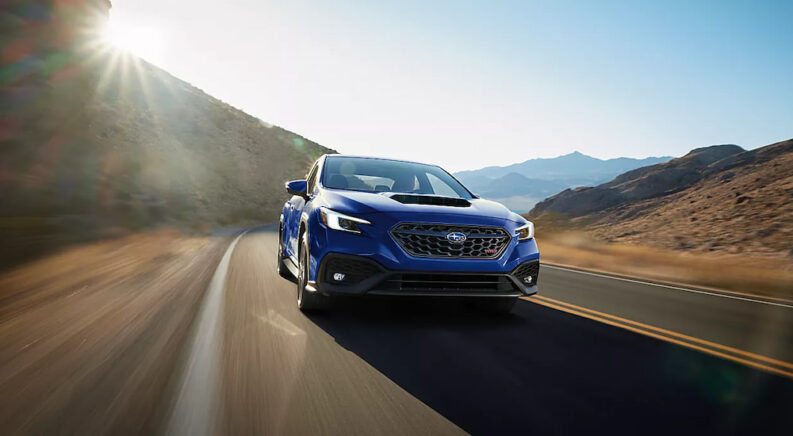
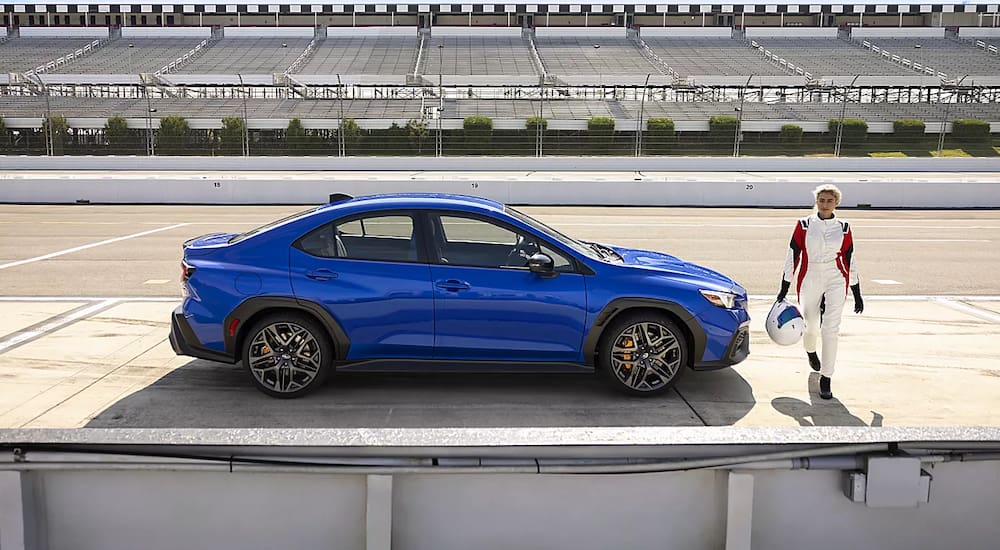
Despite no longer competing at the world championship level, Subaru continued to develop the Subaru Impreza WRX and STI for street-legal driving. It eventually spun WRX off to its own model in 2014, and U.S. sales climbed to 31,358 vehicles in 2017. But as memories of Subaru’s WRC success fade, WRX sales have been declining, perhaps indicating the model has run its course. The introduction of the second-generation standalone WRX in 2021 only temporarily halted the fall, with 2025 marking the low point.
Still Winning on the Rally Circuit
Despite this, I’m prepared to say that Subaru still deserves to be considered a rally brand, although not as prestigious as it once was. The main reason is that Subaru is still cleaning up on numerous regional and national rally circuits, and doing so from an unlikely home base.
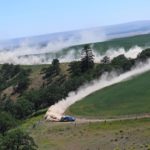
Subaru Rally Team USA (now Subaru Motorsports USA) was founded in 2001 as Subaru’s North American competition division. Then, in 2006, Vermont SportsCar (VSC) became an official technical partner, tasked with managing all U.S.-based motorsports efforts. Together, they’ve become a beast of the Nitro Rallycross Series, American Rally Association, X-Games, and Mount Washington Hill Climb circuits. Subaru Motorsports USA won nine consecutive U.S. rally championships from 2011 to 2019 and has more than 100 victories in rally and rallycross events.
Not only that, but it continues to attract big names. Notably, Travis Pastrana began driving for Subaru and VSC in 2004 and has been with the organizations ever since. In November 2025, VSC debuted a new Gymkhana vehicle for Pastrana at the SEMA Show. Dubbed the Subaru Brataroo 9500 Turbo, or Subaru BRAT for short, it shows the people working for Subaru still take their rally work seriously.
A Possible WRC Return
In September 2023, FIA President Mohammed Ben Sulayem dropped a bombshell. In a meeting with Toyota leadership to discuss attracting more manufacturers to WRC, Toyota mentioned partnering with Subaru on a WRC effort. Then, in April 2024, new Subaru Technica International President Hiromi Tamou said he was interested in returning to WRC to enhance the STI brand, as long as he received approval from the board of directors.
The idea of rejoining the WRC with Toyota’s support makes sense. The two companies have been partners since 2005, and Toyota’s ownership stake in Subaru Corporation now exceeds 20%. Their most famous collaboration for motorsports enthusiasts is the Subaru BRZ/Toyota 86 sports car, and they’re also jointly developing EVs such as the Subaru Solterra/Toyota bZ. Working together on a WRC team wouldn’t exactly be uncharted waters.
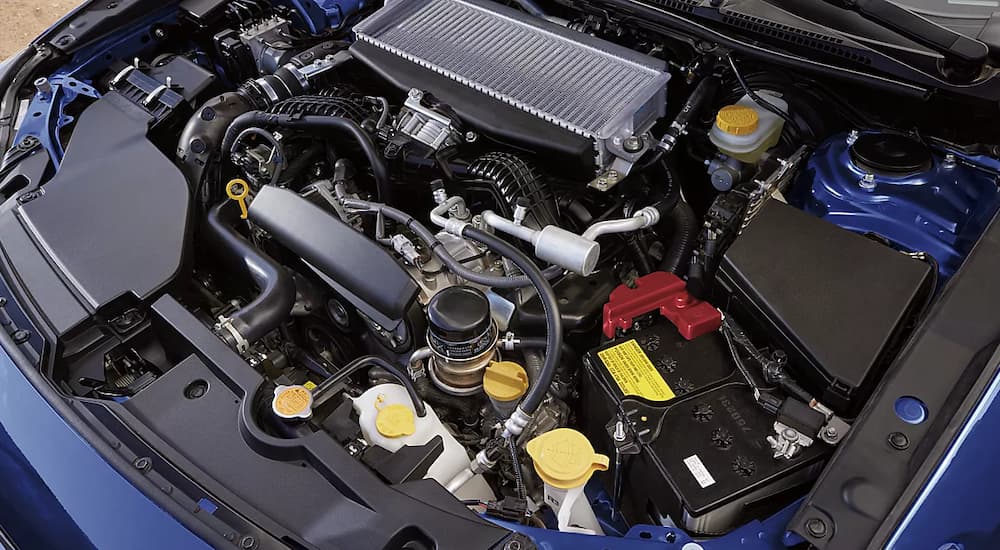
Such an arrangement would also come with technical advantages. Since 2011, FIA has capped the maximum WRC engine size at 1.6 liters. The current WRX engine is 2.4L, and Subaru has stated that developing a 1.6L engine in-house doesn’t make economic sense. As a current WRC participant, though, Toyota already has a 1.6L engine from its GR Yaris Rally1 ready to go, whether in a redesigned WRX or a new platform.
Reigniting the Performance Era
Additional rumors have placed the Subaru-WRC timeline for the 2027 season, which is when new technical regulations go into effect that, among other things, cap horsepower and allow aftermarket tuners to compete. Subaru has yet to confirm any of these rumors, but they have made two other big moves.
In October 2025, Subaru unveiled two STI concept cars at the Tokyo Mobility Show, hinting at a rally-inspired revival. Dubbed the Performance-B and Performance-E STI, it’s easy to see the influence of the original Impreza WRX hatchback on these vehicles, a car that fell by the wayside in 2014 as the WRX spun off into its own model as a sedan. It’s unknown how close these concept cars are to production, but their mere existence is another sign of optimism.
On January 9, 2026, Subaru formally announced the return of the STI badge, which had been discontinued when the second-generation WRX rolled out. The new WRX STI Sport# will initially be exclusive to the Japanese market. It’s essentially the same performance package as the WRX tS in the U.S., but the re-emergence of a car with ZF electronically controlled dampers, large wheels, a spoiler, and the STI badge indicates a shift back to a high-performance agenda.
Looking Down the Rally Stage
Subaru built lots of goodwill on the rally scene throughout the 1990s and 2000s. Nowadays, at least in the U.S.-based rally series, Subaru is the biggest player. This success, along with continued work on the WRX, has been enough to maintain its rally brand status. Even so, it’s impossible not to consider that spending almost two decades away from rally’s biggest international series has taken a toll on its reputation.
Comparing it to my forte of stock car racing, Subaru’s current status is like competing on local short tracks and regional tours rather than the NASCAR Cup Series. Even if a team wins the local championship every year, it doesn’t carry as much weight for the wider fanbase as being a contender on the biggest stage. In other words, it’s a big fish in a small pond. Returning to the WRC and reinvigorating the WRX/STI badges may be the only path to re-solidifying Subaru’s global rally name. While there’s nothing official yet, it appears the winds are blowing in that direction, and rally fans should keep a close eye on whatever comes next.