Once almost as ubiquitous in America as apple pie, rock and roll, and baseball, there was a time when the nation was embroiled in a passionate love affair with the convertible. Convertibles were available from every major American auto manufacturer, and even the most seemingly practical models had convertible versions that offered the free-spirited joy of sun on your face and wind in your hair when behind the wheel. The convertible was a staple on roadways, with drop-tops considered a premium option on many model lines. In the 1980s and 1990s, even efficiency-focused cars like the Geo Metro and the Pontiac Sunbird offered top-down driving options to meet strong consumer demand.
Now, however, you’d be hard-pressed to find an American-made convertible that isn’t an SUV, a Chevy Corvette, or a Ford Mustang. This dramatic shift in preferences didn’t happen overnight, but occurred over decades, driven by market dynamics, changing driver affinities, and the proliferation of SUVs in the American marketplace. While European automakers continue to produce models that offer an open-air driving experience, the market for top-down drivers continues to wane in the United States. What led to the convertible’s fall from grace? Did driver preferences lead to fewer convertible models, or did a more narrow selection of convertible options lead to diminished driver interest?
The Golden Age of Convertibles
There was a time when the convertible was a fixture on roads and highways across the US, a concrete symbol of the freedom and wide-open spaces that Americans cherish. The convertible rose to prominence in the post-World War II era as veterans returned home to a grateful nation after experiencing the hardships of war, flush with new economic resources and a renewed desire to live life fully in the moment. During overseas campaigns, GIs who served in the European theater were also exposed to the litany of convertibles available on the continent, as many European car companies had already embraced the freedom of open-air driving. Many returning servicemen sought to recapture the European driving experience upon arriving back stateside.
The heyday of the convertible came in the 1950s and 1960s as full-scale auto production evolved and nearly every major American automaker offered convertible versions across multiple model lines. The popularity of convertibles was further boosted by movies and television, which prominently featured them. In the 1960s, convertible versions of the Cadillac Eldorado and the Ford Thunderbird became icons that symbolized the American Dream, and everyone aspired to own one someday as a display of style and wealth.
With convertible versions of American muscle cars like the Camaro and the Mustang entering the public consciousness, the late 1960s represented the high-water mark for convertibles, as topless cars comprised about six percent of all car sales. That peak was short-lived, however, as the following decades wouldn’t be kind to the convertible. Several factors conspired against its popularity, beginning its slow decline into obscurity.
The Slow Decline in Interest
After peaking in popularity in the final years of the 1960s, the 1970s marked a sharp decline in interest in convertibles. There wasn’t just one factor that took down the mighty convertible, but rather a confluence of changing driver preferences, manufacturing challenges, and new technology that marked the beginning of the end of the convertible’s wild popularity among American drivers.
The movement towards increased automobile safety began in the late 1960s, but it really gained steam in the following decade. With rising highway speeds and a subsequent increase in traffic fatalities, President Lyndon B. Johnson created the National Highway Traffic Safety Administration to govern automotive safety. The highway safety movement was sparked by Ralph Nader’s book, Unsafe at Any Speed, which painted a stark picture of safety on American roadways. The convertibles of the era became the target of criticism for perceived safety risks, including the risk of ejection during a collision and a lack of rollover protection. That was enough to give many drivers pause, leaving them to favor hardtop models.
The development of automotive air conditioning also led to a decline in consumer interest in convertibles. With the advent of efficient vehicle climate control, the top-down breeze offered by convertibles became less appealing. Automotive AC made perfectly cool conditions attainable in the cabin without rolling the windows down or dropping the top, which was a convenient feature.
For these reasons, American automakers had all but ceded convertible manufacture to the Europeans by the end of the 1970s, with the 1978 Cadillac Eldorado Biarritz marking the final convertible built by an American company for the decade. The convertible did have a last gasp, however. There was renewed interest in convertibles in the early 1980s, as the 1982 Chrysler LeBaron convertible put the droptop body style back on the map. Throughout the 1980s and 1990s, convertible models were produced domestically, and they reached a relative peak in 2004, when approximately 315,000 convertibles were sold in America.
Still, the burst of production wouldn’t last. Another factor would prove fatal to the convertible in the mid-2000s, however, as Americans discovered the SUV. While some SUVs, like the Jeep, offered a topless driving experience, American drivers found the versatility, comfort, and style of SUVs irresistible. Drivers capable of spending more for a premium vehicle opted for SUVs more often, and the popularity and sales of convertibles plunged once again. By 2015, sales of new convertibles had been cut in half. By 2023, only 70,000 were sold in the United States.
The Challenges of Building Convertibles
While consumer preferences were the primary catalyst for the convertible’s decline, on the supply side, automakers no longer felt “the juice was worth the squeeze” regarding convertible production. While convertible models appear to be just slightly altered versions of a primary model line, they are significantly different from their hardtop counterparts in key ways. While there may be cosmetic similarities and overlap with available features, convertibles require considerable attention that many automakers weren’t willing to invest in as sales declined.
Modern production lines are streamlined and automated, leading to greater specialization in manufacturing processes. For example, an automotive plant may build only one or two models to enhance efficiency and reduce production costs. That focus on efficiency is disrupted when a convertible design is added, because convertibles aren’t just topless versions of the primary model line. Whereas differing trims are simple variants of the same design with different features, convertibles must be redesigned to compensate for the lack of a roof. Convertibles represent a different vehicle from a manufacturing perspective, which results in additional costs and reduced production efficiency.
For example, a vehicle’s roof contributes greatly to its structural stiffness, and that’s a key part of its safety profile. Removing the roof means rigidity must be provided elsewhere, and many convertibles feature additional reinforcement in other parts of the vehicle to keep the vehicle structurally sound. Not only does this add weight to convertibles and erode fuel efficiency, but it also requires additional design and engineering. This re-engineering of an existing model is time-consuming and extremely expensive. With demand for convertibles receding, the investment no longer made business sense for automakers.
With convertible sales plunging and returns diminishing, automakers have been unwilling to invest the resources into designing convertible versions of their primary model lines. That has created a feedback loop where convertible popularity is concerned. Consumer interest has waned, so manufacturers are making fewer convertibles. That lack of options and diversity further drives consumers away from the market segment, further magnifying the decline in demand.
Will the Convertible Make a Comeback?
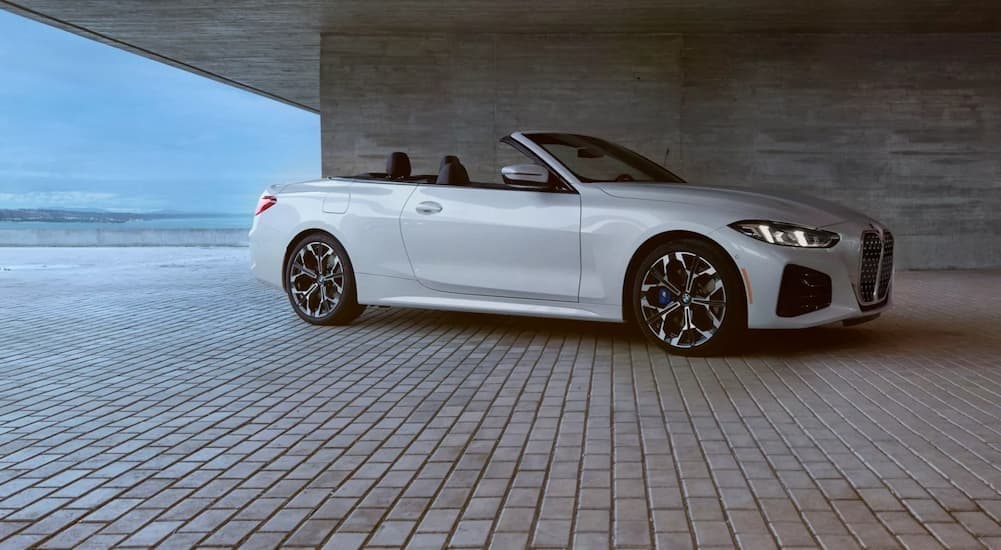
While it’s doubtful that the convertible will ever rise to the levels of popularity enjoyed in decades past, American drivers who love to drive with the top down still have options, though they’re admittedly limited to a few SUVs, domestic musclecars, and import supercars. Premium automakers like BMW, Porsche, McLaren, Lexus, and Mercedes-Benz continue to invest in convertibles for their high-end models, and it’s doubtful that there will ever be a day when Chevrolet forgoes making convertible Corvettes.
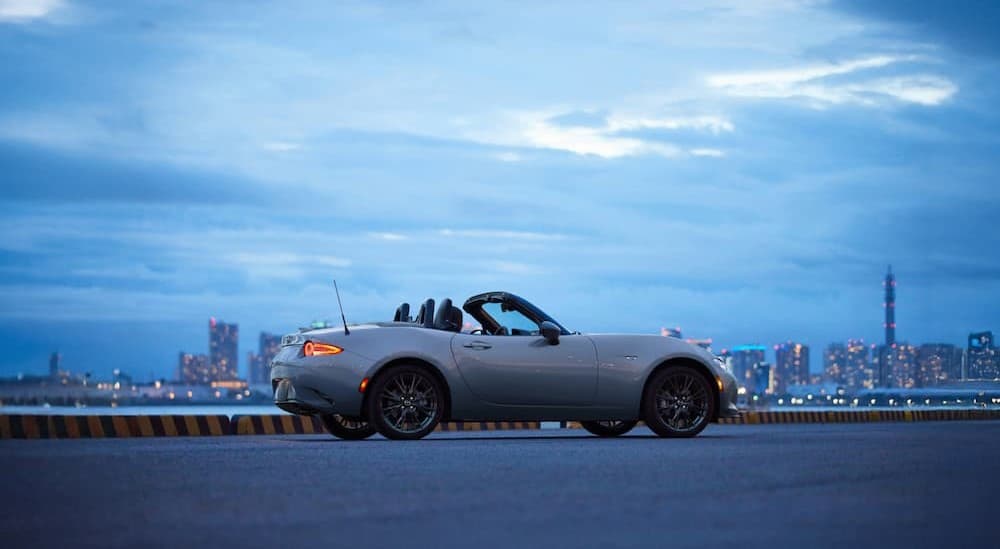
For drivers who don’t want to spend six figures for the open-air driving experience, however, the options are slim. The Ford Mustang still offers a topless pony car, and SUVs like the Ford Bronco, GMC Hummer, Jeep Wrangler, and Jeep Gladiator offer off-road style with removable roofs that let the sunlight in. Other affordable convertible models include the MINI Convertible and the Mazda MX-5 Miata, the BMW Z4, and the Porsche Boxster.
End of an Era
While the convertible will likely never totally disappear from America’s highways and byways, the closed loop of waning consumer interest and diminishing automaker attention is likely to suppress a comeback of convertibles in the near future. Modern drivers are obsessed with SUVs to the point that most American automakers have eschewed sedans and coupes in favor of a wider lineup of SUVs. The emergence of hybrid and EV technology has also drawn attention away from convertibles, as drivers prioritize efficiency, versatility, and convenience over the unabashed feeling of freedom they offer. One day soon, exotic European supercars and SUVs may represent the last bastion of the convertible, the once proud icon of the American Dream.