The steady abandonment of classic sedans and performance cars by the Big Three has been widely reported. It had reached the point where the Ford Mustang, Chevy Corvette, and a pair of Cadillac sedans were all America could hang its hat on. But suddenly, this trend is starting to reverse, and an unexpected name is at the center of it.
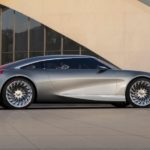
On April 7, 2026, the same day word leaked that GM is reviving the Chevy Camaro for the 2028 model year, Automotive News reported that Buick is joining the party. The premium nameplate hasn’t had a U.S. sedan offering since dropping the Regal in 2020, and its last RWD vehicle was in 1996. Now, an as-yet-unnamed Buick will be built on the same Alpha 2-2 platform as the new Camaro and the next-generation Cadillac CT5.
It’s exciting news for everyone, especially people like me who are old enough to remember when Buick was a major player in performance and motorsports. With its apparent return imminent, it’s time for a refresher of how Buick has gone fast in the past and look at how it’s going fast into the future.
Buick’s Forgotten Performance Heritage
Fans of Buick in the 21st century might find it hard to believe that it was once a widely respected performance marque. After all, the current lineup consists entirely of crossover SUVs. Let me tell you of a time when, if you wanted to spike your adrenaline, you got a Buick.
Buick Performance for the Streets
It didn’t take long after Buick’s 1899 founding for it to enter the high-speed space. One of its early efforts was the 1910 Buick 60 Special, which could travel 110 mph with its I-4 engine. Considering the inaugural Indianapolis 500 winner the following year averaged less than 75 mph, hitting 110 was a major accomplishment.
The company continued to innovate and accelerate throughout the 20th century. In 1936, Buick introduced the Century, which produced a then-impressive 141 hp with its I-8 engine and domed pistons. Buick did several runs of the Century over the decades, and it even paced the Indy 500 multiple times in the 1970s after being redesigned as a midsize car.
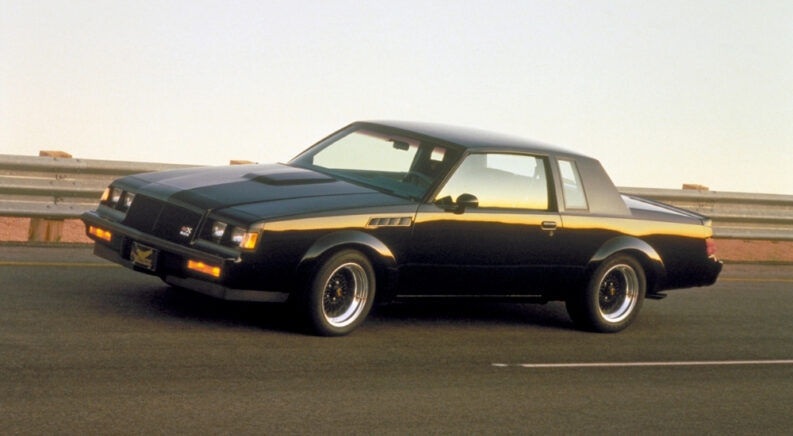
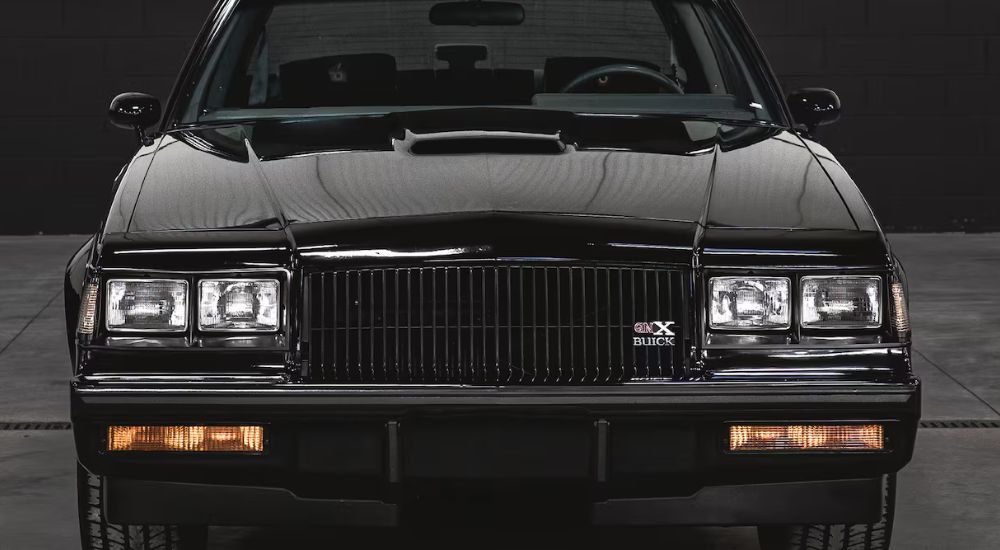
Another notable ride was the Buick Grand National/GNX, a 1980s darling that rose to become the world’s second-fastest production car. Arguably, the most famous Buick performance cars bore the Gran Sport, or GS, moniker. Introduced in 1965 as a high-horsepower version of the Skylark, the Gran Sport eventually spawned the GSX muscle car, plus GS variants of the Riviera, Wildcat, Apollo, and even the Century.
However, as the 21st century arrived, Buick’s performance chutzpah began to wane. The Century was finally discontinued for good in 2005. While the Regal sedan got a GS treatment in the 2010s, it didn’t last, as the Regal was on the way out, too.
Buick in Motorsports
During its time as a performance automaker, Buick was just as quick on the track as on the main roads. Many people don’t know this, but the first race at Indianapolis Motor Speedway was the Prest-O-Lite Trophy, a 250-mile contest in 1909. The winner was “Wild” Bob Burman, and he drove a purpose-built Buick. It’s one of 500 winners’ trophies the factory team reportedly captured between 1908 and 1910.
Early motorsports success was also found in endurance and hillclimb racing. Although there were some bumps in the road, Buick kept popping up on the racing scene. It won a one-off return of the Elgin Nationals in 1933 with Phil Shafer at the controls. There were multiple Buicks in the first-ever NASCAR Grand National event in 1949, for which the later Grand National street car was named. Buick also began showing up on the Indy 500 scene in the 1960s.
For the modern era, the 1980s were Buick’s time. From 1981 to 1983, Buick took advantage of NASCAR Cup Series rule changes to win 52 races and three championships with a redesigned Regal. DiGard Racing accounted for all three titles with drivers Darrell Waltrip and Bobby Allison. People saw Buick enter the IMSA GT and Trans Am Series during the same period.
Buick also developed the infamous Indy V6 engine used from 1982 to 1997. The engine won three Indy 500 poles but had reliability issues and never won a race. Then, throughout the 1990s, GM pulled Buick from every notable series, replacing it with the Chevrolet, Pontiac, or Oldsmobile names. Ironically, Buick is still here, while the Pontiac and Oldsmobile brands are now in the automotive graveyard.
What Do We Know About the New Buick?
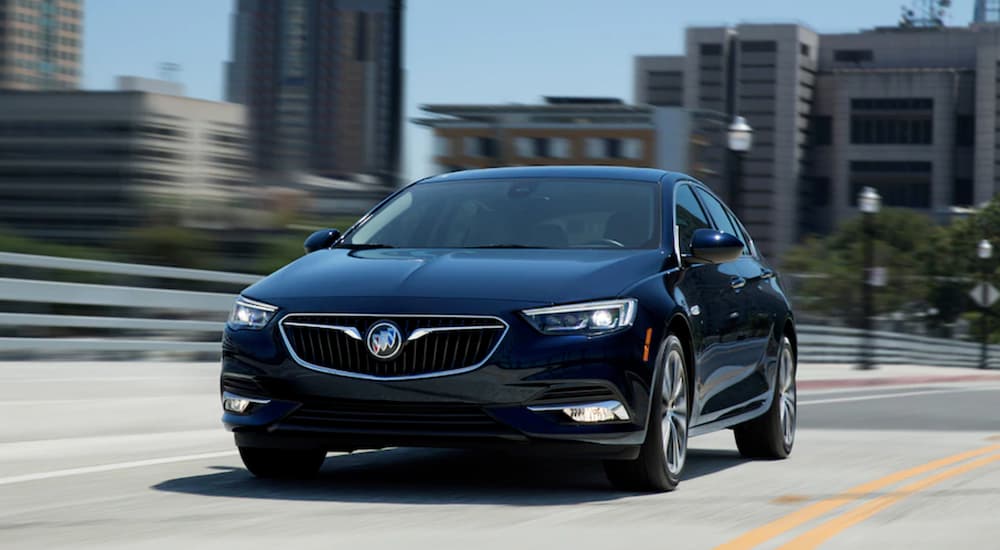
After years of having seemingly accepted its lot as an SUV-only middle ground between the everyman Chevy and the full-luxury Cadillac in the United States, Buick is re-entering the sedan space. Unfortunately, not many details have been released that are specific to the Buick. Knowing it’s sharing a platform with the Camaro and CT5, though, provides a little insight.
Some information is available on the Camaro, and it’s reasonable to assume the Buick version will have some of the same design features. It’s known that the seventh-generation Camaro will have RWD, an optional V8 engine, and an available manual transmission. There’s also talk that it could be available in two-door and four-door versions.
I think the chance of the Buick version being a four-door is much higher, as is the chance of an AWD upgrade. The Alpha 2-2 platform has utilized many types, from the 2.0L turbocharged I-4 to the 6.2L supercharged V8. As such, there’s no guarantee Buick even uses the same engine(s) as the Camaro or CT5. The speculation in the coming months will be part of the fun.
Ultimately, I think the big question is how Buick will balance performance and luxury. The Camaro is undoubtedly a performance name, and the CT5 is more on the luxury side. Buick will likely be somewhere in between, but where? Which aspect the automaker emphasizes is key to what consumers should expect.
What Could the New Buick Be Named?
There’s also the matter of what to name this next-generation Buick. A great name goes a long way toward a car’s performance appeal. The Buick Grand National probably wouldn’t be as beloved if it didn’t have such an ear-catching, statement-making name harkening back to Buick’s racing history.
If Buick decides to revive a previous name as a tribute to its performance past, there are plenty of great options. To me, four of them stand out as the best options.
- Regal: It’s the Buick name least associated with street-legal performance, but most associated with motorsports success, making it a worthy callback.
- Century: This is the longest-running name in Buick’s performance catalog, and it would be a cool way to embrace the company’s heritage.
- Gran Sport/GSX: As the name that brought Buick into the muscle car field, this would be appropriate to stand alongside the Camaro, which originated in the same period.
- Grand National/GNX: Buick has teased the return of the Grand National multiple times, and now’s the perfect opportunity to make it happen.
Of course, other well-known names from Buick’s history could be considered, including Skylark, LeSabre, and Roadmaster. There’s also the chance that Buick decides to come up with an all-new name, rendering this section moot.
The Return of Buick Performance
No one should lose track of the main point here, though, and that’s Buick getting back into the sedan and performance games. Given the shift in the Big Three’s focus and the fact that most of Buick’s success is tied to overseas sales, especially in China, where it’s considered a true luxury car, I never thought I’d see another rear-wheel drive Buick sedan. While we don’t know the exact day the new Buick performance car will hit dealerships, we do know it’s imminent. The more I research and learn about it, the more excited I am, and I can’t wait to check back on this story as the Buick performance revival draws near.