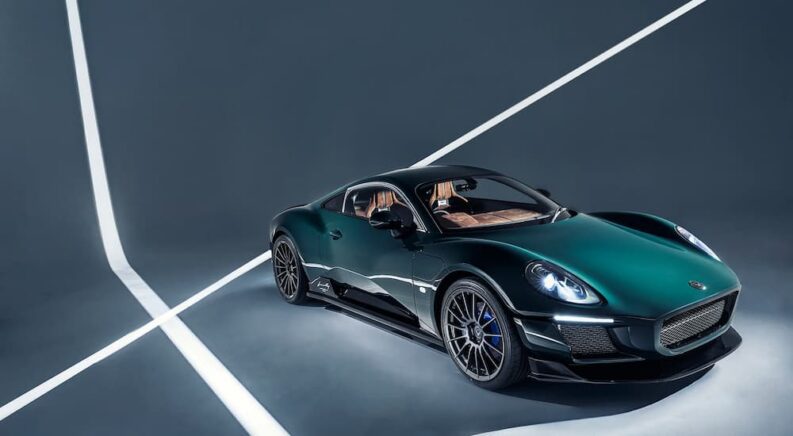
There are certain brands and models in the world of automotive that feel like they’re stuck inside the pixels of a TV screen or the pages of a magazine. They’re untouchable, even sacred. Caterham Cars is one of those. For decades, Caterham has been standing on Lotus founder Colin Chapman’s philosophy of “Simplify, then add lightness.” Its bread-and-butter, the Caterham Seven, is just about as analog as a car can get in the 21st century. It’s tiny, mechanical, and unapologetically raw.
When the Caterham Project V, an electric coupe concept, was announced, my first reaction was not excitement. It was panic. However, the more I’ve looked into what Project V actually represents, the more I’ve realized that Caterham isn’t abandoning its soul. It could be the most interesting evolution of lightweight performance we’ve seen in the EV era.
Lightening The Load
Usually, when manufacturers go electric, they end up with a bloated brick of lithium-ion. What I mean by that is batteries are heavy. Then the cars are structurally reinforced to hold that battery. By the time you add on the burden of all the luxury technology, you’re looking at a 4,500 to 5,500 lb “performance” EV. That sounds more like a ballistic missile than a sports car.
Project V doesn’t adhere to that script. Caterham developed the car in partnership with Yamaha Motor Company, using their electric powertrain expertise. The star of the show here isn’t the horsepower. It’s the weight, approximately 1,430 kg (around 3,152 lbs). For an EV, that’s astounding.
To put it in perspective, most electric performance cars weigh at least 1,000 lbs more. Even compact EV crossovers tip the scales heavier. Project V lands closer to traditional lightweight sports-car territory, which tells me Caterham understood the assignment. If you’re going to electrify, you can’t lose agility. That’s the difference between building an electric car and building a Caterham.
Three’s Company
Project V features a configurable 2+1 seating layout. That means two seats up front and a single seat in the rear, slightly centered behind. It’s not a full four-seater. It’s not a token back seat, either. It’s clever. The platform is flexible enough to allow a traditional 2+2 configuration if you so desire, but the 2+1 concept speaks to enthusiasts who occasionally need the utility of extra space without sacrificing the car’s compact footprint. It reminds me of how lightweight sports cars of the past have tried to balance usability and purity, but with a modern twist. This isn’t some bulky grand-tourer parading as a sports car. It’s compact, tight, and purpose-driven.
Balance Over Bravado
Let’s get into the performance a bit, but not in the typical EV chest-thumping way. Project V uses a rear-mounted electric motor producing around 264 hp. In the EV landscape, where numbers like 600+hp are thrown around casually, that doesn’t seem like anything exciting.
But the kicker is the power-to-weight ratio. Sitting at roughly 3,152 lbs, 264 hp is more than enough to create a properly engaging experience. Caterham claims 0 to 62mph in around 4.5 seconds and a top speed in the neighborhood of 143 mph. More importantly, the battery is relatively modest at just 55 kWh. That keeps the weight down and maintains balance. Its estimated range is around 249 miles.
I love that Caterham stayed true to who they are by not chasing insane range numbers. They prioritized what they have always had: balance, light weight, and handling. These are the things that drivers really care about.
Standalone Spirit
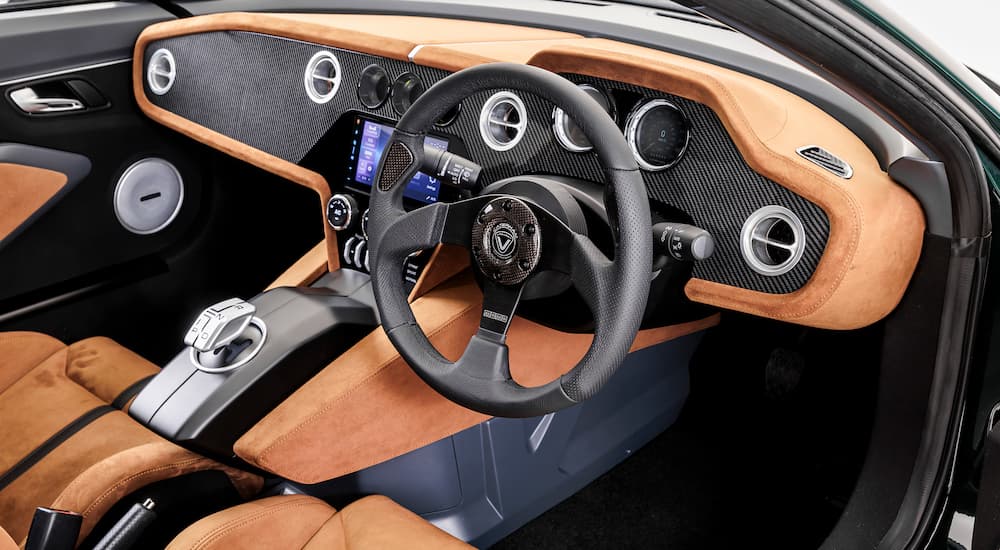
When I first saw the shape, I was surprised. Project V doesn’t scream Caterham, and that’s because it doesn’t resemble the Seven in the slightest. It’s a sleek coupe that looks more like something from a Panoz or Porsche catalog. That’s because it was designed in collaboration with Italdesign.
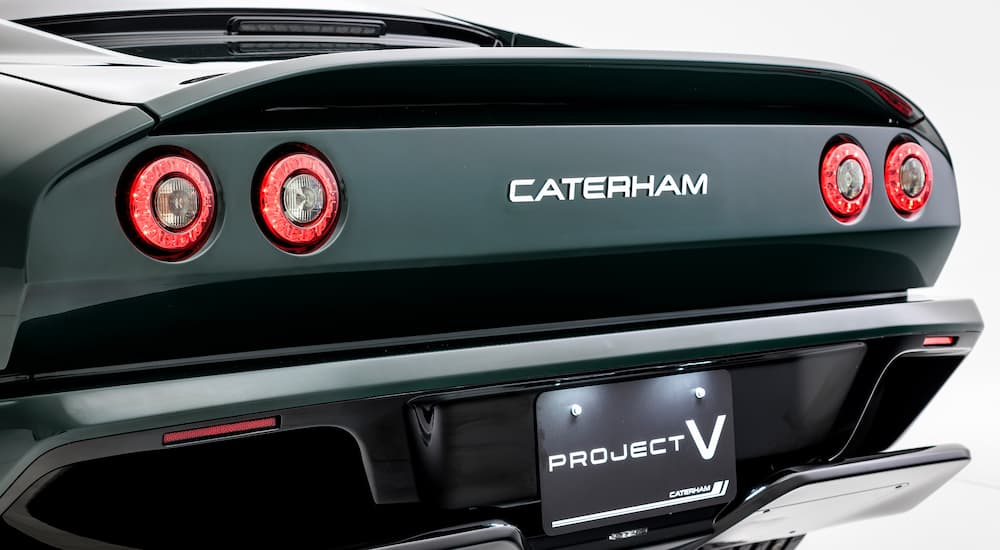
But the more you look at it, the more sense it makes. It’s minimal. There are no aggressive or fake aero bits, no massive grille pretending to cool an engine that isn’t there. The surfaces are clean, functional, and aerodynamic without being too loud, everything a Caterham should be.
In a world where EVs too often look like concept cars that escaped a wind tunnel experiment, Project V looks resolved, refined, even. It looks like the proper sports coupe that it claims to be. That’s important. If Caterham is planning to expand beyond the Seven, it can’t just build a spinoff novelty. It needs a car that can stand on its own while still honoring the lightweight spirit.
This Is the Way
Project V isn’t just another electric sports car concept. It’s proof of concept for something the enthusiast community has been begging for: an EV that doesn’t weigh as much as a luxury SUV. Most of the EV market today focuses on brute-force acceleration, instant torque, and cheek-stretching 0-to-60 times. They rarely turn to look at any delicacy, steering feel, chassis balance, or playfulness.
Caterham is betting that those qualities still matter, even in an electric future. Honestly, I think they’re right. I know they are. The enthusiast community is split down the middle on EVs. Some see them as inevitable, but lacking soul. Others embrace the performance potential, but miss the drama of a mechanical drivetrain.
Project V doesn’t try to replicate engine noise with gimmicky speakers. It doesn’t fake gear shifts. It leans into everything that electric propulsion does well—instant torque and flexible packaging—while also preserving lightweight dynamics. That’s the blueprint.
Not Identity Theft
This is absolutely critical because it’s what first struck fear in me. Caterham has made it abundantly clear that the Seven isn’t going anywhere. In fact, they’ve been developing an electric Seven as well, but Project V is in no way meant to replace it. The Seven is the purest expression of open-air, minimalist driving. Project V is a different experience, a closed-roof coupe that broadens the brand’s appeal. I think that’s a smart move.
Enthusiast-based brands survive by evolving slowly, carefully, and strategically. Look at how Porsche transitioned from air-cooled to water-cooled engines without losing its identity. Project V feels like that kind of moment for Caterham.
Reality Check
In the end, this is still a concept. Plans for productions suggest very limited numbers, potentially as low as 2,000 units per year if it moves forward. Pricing is expected to land somewhere within the territory of “performance sports car,” so not the most budget-friendly.
Because it’s electric, it will inevitably face major skepticism from hardcore purists who equate “fun” with combustion. I get that. I’m someone who’s still holding on to the mechanical drama of an engine climbing toward redline. I love the smell of fuel, the sketchy vibrations, and the imperfect rhythms of internal combustion.
However, as the previous owner of a Mazda MX-5 Miata, I also love lightweight cars. If my choice, in the future, is between 5,000 lb EV rocketships and a 3,152 lb electric coupe built around balance and agility, I know which I’m choosing.
Less Is More
The main message Project V is sending to me is that the future of enthusiast cars doesn’t have to rest solely on excess. It can also be about restraint, smaller batteries, rear-wheel drive, reasonable power numbers, a lightweight chassis, and a focused, purpose-driven design. That formula excites me more than any four-digit horsepower figures ever could.
If Caterham pulls this off and delivers a genuinely engaging, lightweight electric sports coupe, it could set a template for other small manufacturers to follow. Maybe, just maybe, it will remind larger automakers that performance isn’t just about straight-line dominance. It’s about feel. It’s about the heart. It’s about the soul.
Faith In The Featherweight
When I first heard the words “electric Caterham,” I braced myself for disappointment. I could smell the betrayal. I expected a compromise, a staple identity lost, another brand bending under industry pressure.
Instead, the Caterham Project V feels like defiance and rebellion. It’s a statement that lightweight engineering still matters, that drivers still care about balance, and feel. Performance doesn’t have to mean excessive mass and crazy power numbers. Will it replace the emotional chaos and heart-pumping soul of a screaming internal combustion engine? No, but that’s not the point they’re making here.
The point is that if the automotive world is truly shifting toward electrification, niche brands like Caterham have a choice to make. They can follow trends and build heavy, tech-burdened tanks, or they can reinterpret their core philosophies for a new era. Project V chooses the latter. As someone who lives for cars that prioritize driver engagement over marketing numbers, I find that deeply encouraging. If this is truly what the electric sports car future looks like—lean, focused, lightweight—I’m not scared of it anymore. I’m ready to drive it.