The 2025 model year has been one of the most innovative in automotive history. Manufacturers are packing cars to the brim with cutting-edge technology. Performance models have become more attainable and more based on what enthusiasts are looking for. Commuters are being offered better and better fuel economy. It seems like everyone is winning, but there are two sides to every coin.
Some of the year’s most wildly hyped promises fell flat. Performance woes, lack of “bang-for-your-buck” value, and problem-riddled powertrains are just a few of the reasons for the failure of these models. However, soul is a failure that only one model could attain. That model is the 2025 Dodge Charger Daytona.
Fitting the Bill
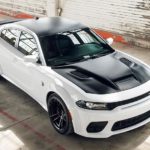
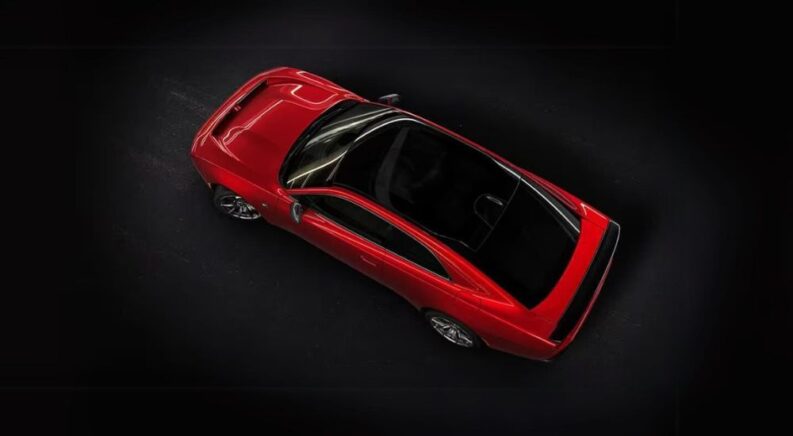
When Dodge revealed the 2025 Charger Daytona, muscle car fans everywhere were on the edge of their seats. The iconic Charger name was paired with the renowned “Daytona” tag. It had all the right promises of heritage meeting modern technology. The potential to deliver is there, with up to 670 hp, all-wheel drive, rapid EV acceleration, and a bold look rooted in the past.
Something in the recipe just soured. Rather than having their souls set on fire by this machine, it’s setting fires in the eyes of those loyal “Mopar Or No Car” fans who bought into the hype of its release. Compromised range, charging and software gremlins, and poor handling for something marketed as a “muscle car” are just a few of the problems people have reported having within days of leaving the lot. On top of all that, something a bit more intangible seems to be missing: the heart of “American Muscle.” All other problems aside, the lack of raw, mechanical soul is enough to earn the Charger Daytona this title.

The Strongest Bones and Fractures
Several aspects of the Charger Daytona look good in a brochure or on a spec sheet. Many reviews have highlighted the power, the dual motor AWD setup, and the Stage 1 and Stage 2 boost options. MotorTrend tested the 496-hp Charger R/T from 0-60 in 4.7 seconds, and ran the quarter mile in 13.1 seconds. The 670-hp Scat Pack did 0-60 in 3.2 seconds and an 11.5-second quarter mile.
That’s not too bad, but Dom Toretto would still want a 10-second car. Having specs like that, this thing could’ve been a game-changer if everything had aligned. The muscle legacy ushering in the era of EV (and near-EV hybrid) with some authenticity. So many of us had hoped for a re-awakening of Mopar magic.
Where It Stumbles
The EV Charger doesn’t feel violent enough to be labeled a “muscle” anything. There is no adrenaline, no tire smoke, no soul. For a car wearing both the “Charger” and “Daytona” names, we expect brute force and intimidating growls, not refined tea-and-crumpets behavior. Also, a “muscle car” that needs to be plugged in more than it revs is less than a heart-pounding dream. Car and Driver noted that the Scat Pack version was only able to deliver around 216 miles of range on its standard road trip test loop.
Dodge’s idea of meeting “muscle EV” standards is the synthetic “Fratzonic exhaust” sound playback. They say, “There’s no replacement for displacement.” If there were, it definitely wouldn’t be exhaust notes played over the surround sound. What kind of “muscle car” can’t even do a burnout? For enthusiasts of all sorts, this feels like a concession, at best.
Freezing screens, charging faults, sliding seat issues, a barrage of fault codes, and full-on shutdowns are all problems that consumers have reported within the first few miles of purchase. Enthusiasts weren’t born yesterday, and are more than privy when something that should work doesn’t.
Finally, posted prices are rocketing toward real sports car money without getting sports car purity. According to Car and Driver, the 2023 Charger started at a reasonable $36,920. The Scat Pack, the top model aside from the Hellcat variants, originally sold for $59,515. In contrast, the 2025 Charger Daytona R/T, the “entry level” model, starts at $59,595, while the Scat Pack starts at $73,985. This has left consumers scratching their heads, asking, “Who is this for?!”

When Good is Just Not Enough
There are some actual positives to the Charger Daytona. It can, in fact, turn heads, accelerate quickly on paper, and deliver a comfortable cabin space with some new muscle car aesthetic. Unfortunately, enthusiasts look for more than just specs on paper. They’re walking into car meets, lining up for roll races, and hitting backroads expecting a visceral experience. They need a car to tickle their senses. They need to feel the torque, hear the engine growl (a real engine, not some electronically generated facsimile), and see the hood rumble at any RPM. They need a car they can connect with on an almost spiritual level. They need a car that delivers, and the 2025 Charger Daytona just can’t quite make the cut.
The hype said, “Traditional muscle reborn. Heritage meets the future.” But the actual driving experience whispers more to the tune of “Modern cruiser in a muscle car costume.” For the weekend warrior, the Sunday morning show-off, or the dragstrip regular, this machine is dodgy, at best.
The Fast and the Forgettable
If you’re someone who lives and breathes the muscle car lifestyle, craves that raw mechanical feeling, or wants to break the back end loose and smoke the tires, this car will absolutely disappoint. The 2025 Dodge Charger Daytona could have heralded in a new era of electric muscle with a Mopar soul. Instead, it feels like another cookie-cutter electric machine chasing metrics and benchmarks, forgetting what their demographic holds sacred: honesty, character, and soul. It’s not atrocious in every sense. The architecture is promising in some ways, and the performance is real on paper. However, for the meet-goer, the performance chaser, the enthusiast, and you, it falls short in every way that matters. It trades the essence of muscle for tech-car packaging.
If you’re still intrigued, drive it yourself. Test it hard and go as far as they’ll allow. Fight the steering and check out how it handles winding roads or straight stretches. See if it feels like a muscle car. Talk to owners and check out forums for more first-hand experience. Ask about firmware updates, reliability issues, and the solutions they’ve come up with for complete shutdowns. Compare the Charger Daytona with other market alternatives. Yes, there are faster cars, and some are much less expensive. If you’re spending big money, you should expect uncompromising muscle, character, and soul.
To our friends at Stellantis: If you’re going to release a vehicle wearing the “Charger” and “Daytona” badges, touting significant horsepower, dual-motor all-wheel drive, and referencing words like “legacy,” then you have to deliver where it matters. You have to serve up the character, the sound, the feel, and the soul. You can’t just throw some specs out on a brochure and hope that it’s enough. In 2025, there are numerous options and possibilities, yet you somehow managed to overlook all the ones that matter to your audience. That’s why we feel that the 2025 Dodge Charger Daytona missed the mark more clearly than any other car, winning it the infamous award of “Worst Car of 2025.”