Since its earliest days, the Ford Motor Company has been synonymous with motorsports and going fast. Ford is to racing as apple pie is to vanilla ice cream. They belong together. On September 4, 2025, Ford made that official to anyone who might still doubt their commitment, rebranding its “Ford Performance” division as “Ford Racing.” By the time you read this, the new logo, which features the word “Racing” in blue beneath the iconic Ford blue oval, may already appear on factory-supported and Ford-branded machines.
A cynic may argue that this rebrand is merely stating the obvious. But as someone who follows auto racing of all stripes (and who still dreams of owning a Ford Mustang), I know there’s more to it than that. A brand is a message, and like other rebrands and renaming, such as Dunkin’ Donuts becoming Dunkin’, there’s always a deeper reasoning. Here’s a closer look at what Ford Racing means and why going back to this moniker is an important step for the automaker.
The Name Racers Trust
Racing isn’t just something Ford does. It’s part of their identity. The earliest pivotal moment for the company came in 1901, when Henry Ford entered his car, “Sweepstakes,” in a Grosse Point, Michigan event hosted by the Detroit Driving Club. It was the first race ever for the 38-year-old businessman, but he needed a good outing to secure investors for his concept of affordable, mass-produced cars. That’s exactly what Henry Ford did, beating Alexander Winston, arguably the most successful race car driver and builder of the time, in a mano-a-mano shootout.
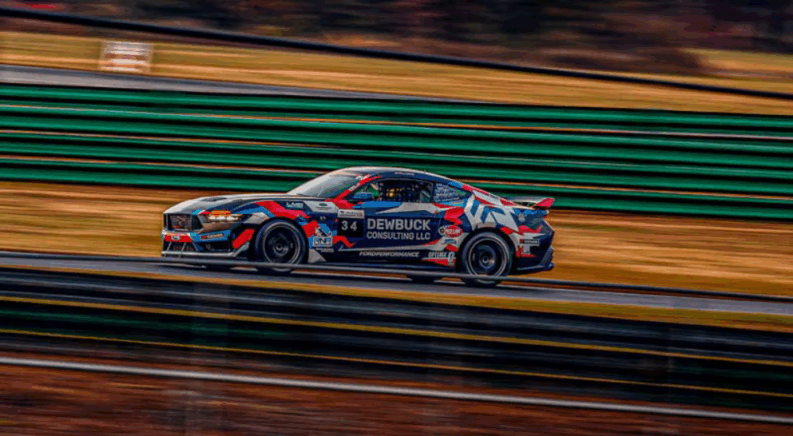
This forged motorsports in Ford’s DNA from the get-go. Among other achievements, Ford has set numerous track and speed records, won the inaugural race in what is now the NASCAR Cup Series, and dominated elite open-wheel racing, including Formula One and the Indy 500. Currently, Ford supports teams in all three national NASCAR touring series, as well as the Australian V8 Supercars Championship, the World Endurance Championship, and numerous local tracks and regional series. The rebrand also comes on the verge of Ford returning to Formula One as an engine supplier to the vaunted Red Bull Racing and Racing Bulls teams.
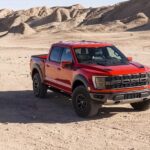
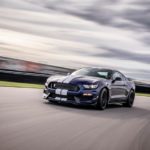
Along the way, Ford has applied its racing and performance technologies to street cars as well. The Ford Mustang wasn’t the first pony car, but it’s undoubtedly the most famous, with over 60 years of rowdiness to its name. Ford’s racing technology and designs have been incorporated into cars like the Fiesta, Focus, and Thunderbird. Trucks and SUVs often receive the high-performance treatment as well, most notably the Raptor loadout currently offered on the F-150, Ranger, and Bronco.
A Brief History of Ford’s Motorsports Brands
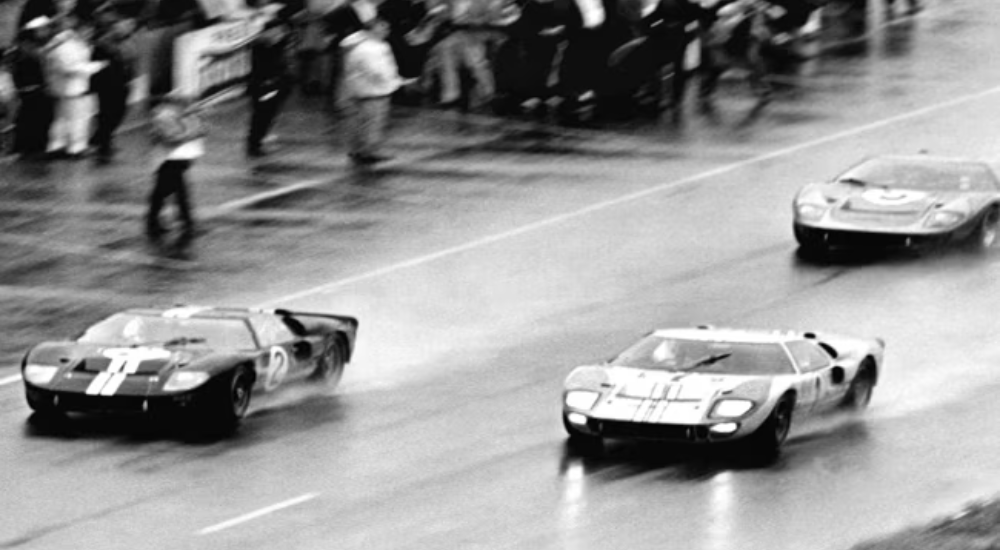
One result of having its fingers in so many performance pies is that Ford has utilized numerous sub-brands over the decades. Each of the divisions emphasized a different aspect or region related to performance. Ford Racing, itself, was a name prominently used for its NASCAR and open-wheel efforts, along with other motorsports endeavors involving North America. Some of the other notable Ford divisions over the years include:
- Special Vehicle Operations (SVO): Ford established this division in 1980 to design and build high-performance race cars, limited-production vehicles, and specialized parts. It was run by Ford’s German racing head honcho, Michael Kranefuss (a future NASCAR team owner). Its earliest project was the turbo I-4 Mustang SVO that reinvigorated the nameplate.
- Special Vehicle Team (Ford SVT): As the successor to Ford SVO in 1991, the mission was clarified to create “factory hot rods” and other high-performance, street-legal vehicles. Highlights included an all-new Mustang Cobra, the F-150 Lighting, and the SVT Raptor. The group also developed the Ford GT supercar for the 2005 model year.
- Ford TeamRS: This was the European branch of Ford Racing, with the RS standing for “Rallye Sport” and emphasizing the continent’s interest in rally racing. It was responsible for numerous RS and ST (Sports Technologies) vehicles, which aimed to strike a balance between sporty and everyday performance.
- Ford Performance Vehicles (FPV): Operating from 2002 to 2014 as a successor to Tickford Vehicle Engineering, this partnership between Ford Australia and Prodrive produced high-end cars down under, such as the FPV FT sedan and F6X crossover SUV. It also operated a V8 Supercar team, known as Ford Performance Racing, during this period.
In 2015, Ford decided to consolidate its remaining high-performance brands under one global roof, a “halo brand,” if you will. Ford Racing, Ford SVT, and Ford TeamRS were merged to become Ford Performance. The name reflected that Ford was involved in everything performance-related, including racing, on-road adrenaline, and off-road adventure. It also meant that some vehicles, which were previously only offered regionally, such as the Focus RS, received worldwide releases.
A New Message for a New Era
Just ten years later, though, Ford rebranded again, bringing back the “Racing” name and ditching the “Performance” moniker. According to Will Ford, the great-great-grandson of Henry Ford, it’s more than a simple name change. To quote his official announcement, “This is not a marketing exercise. This is a promise. It signals a new, more focused mission to tear down the wall between our race teams and the engineering of the vehicles you drive every day on and off road.”
For as long as Ford’s performance-focused divisions have existed, they’ve all centered on developing cars and technology directly for the track and/or applying racing-inspired engines, chassis, aerodynamics, etc. to street vehicles. Either way, competition is the driving force behind everything these divisions do. By rebranding as Ford Racing, the division embraces the link between those who participate in professional motorsports and those who want that thrill in their daily lives. As the new Performance Vehicles section of the Ford website now says, “Race Day Meets Every Day.” Unifying the message relays to customers that the technology in the Ford high-performance vehicles they drive comes directly from the tracks where Ford has reigned for so long. Furthermore, this rebrand includes experiences like driving schools and the Bronco Off-Roadeo, which Will Ford declared “…are a core part of our mission.”
What Should We Expect Next?
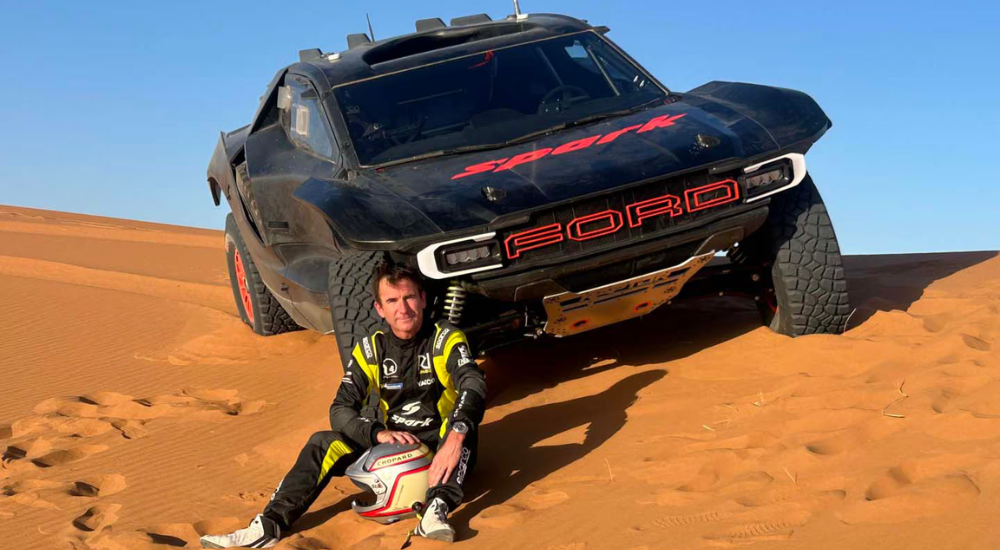
Ford promises this new brand and vision will bear fruit soon. In the announcement, Will Ford teased that the first product vehicle from the Ford Racing umbrella will arrive in January 2026, which is also when they’ll hit the track with the annual Dakar Rally and the buildup to the Rolex 24 Hours at Daytona. Whether it’s a Mustang that surpasses the 815-hp GTD, the off-road supercar that Ford CEO Jim Farley openly covets, or another vehicle remains to be seen.
At the same time it announced the rebrand, Ford also signed Daniel Ricciardo as a Ford Racing ambassador. The Australian is an eight-time Formula One winner, having retired after the 2024 season, so his presence fits perfectly with the impending return to the World Championship. Interestingly, though, it appears Ricciardo will also have a role promoting the Raptor off-road performance nameplate.
Regardless, I’m eager to see what comes next. Ford’s rich motorsports heritage is undeniable, and this rebrand shows that while some automakers are moving away from competition, such as Porsche exiting the World Endurance Championship or Toyota leaving NHRA, Ford is doubling down. The Dearborn adrenaline enthusiasts are here to stay, to the benefit of everyone who loves excitement at the wheel.