Off-road driving isn’t a one-size-fits-all pursuit. An SUV designed to handle deep snow or icy roads might not have what it takes to succeed in extreme off-road environments, while a dedicated rock-crawler or mudding rig might lack the on-road comfort and convenience that modern drivers have become accustomed to.
Picking the right model all starts with an honest assessment of how the vehicle will be used. Those who live in colder climates might put a premium on winter weather performance, but if you’re looking to cross a steep grade or notoriously muddy trail off of your off-road bucket list, it could lead to a different choice entirely.
Selecting the right off-road SUV might seem intimidating, but we’re here to help. To connect readers with the right vehicle for their unique driving goals, we’ve compiled a quick guide to common off-road activities, the challenges they present, and the features, models, and trims that can help you tackle even the toughest terrain. From snow and ice to deep mud and rocky terrain, here’s what drivers should look for when choosing their next off-road model.
Snow and Ice
Must-Have Features: AWD/4WD, winter tires, ground clearance, traction control, locking/limited-slip differential
When the flurries start to fly, you need a vehicle that’s up to the task. Snow, ice, and other harsh winter weather conditions can make driving difficult or even force drivers to stay off the road until the plow truck has made a couple of passes. Luckily, there are plenty of winter-ready models that are designed to dash through the snow like a modern-day one-horse open sleigh.
Traction is the keyword when it comes to any off-road model, but it’s especially important when you’re dealing with the low-friction scenarios brought on by snow and ice. While 4WD can be useful in deep snow or extreme off-road conditions, an AWD model is usually the more practical choice. Drivers don’t have to manually switch between settings, as most AWD systems seamlessly shift power where it’s needed most.
That said, you can never underestimate the importance of some good winter tires. A 2WD model that’s been equipped with snow tires can actually outperform an AWD model with all-season tires, which proves just how much of a difference the right kind of rubber can make.
Finally, there’s a good traction control system. Selectable drive mode systems have become an increasingly common feature in many crossover and full-size SUV models, allowing drivers to dial in their preferred settings to succeed in even the toughest conditions. From adjusting the engine’s throttle response and transmission ratio to tweaking the AWD engagement and activating features like Hill Descent Control, a traction control system is worth its weight in gold if you regularly encounter challenging conditions.
Our Recommendation: Subaru Outback Wilderness
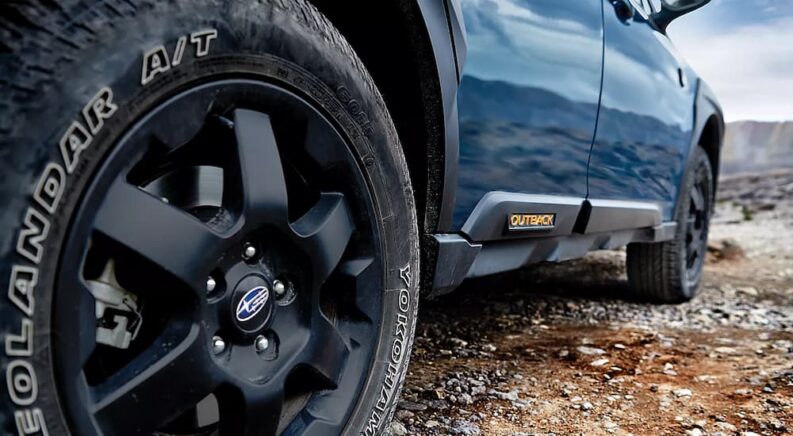
Subaru has long been known for its off-road prowess. In fact, every one of the brand’s current vehicles (aside from the BRZ sports car) is equipped with Subaru’s Symmetrical All-Wheel Drive system right out of the box, but it’s the Outback’s available Wilderness trim that’s really primed for a little winter fun.
The Outback Wilderness features everything from all-terrain tires and electronically controlled shocks to a dual-function X-Mode traction management system that includes specific settings for Snow/Dirt and Deep Snow/Mud. Hill Descent Control comes standard on the adventure-ready model, which also offers 9.5 inches of ground clearance.
The Outback is also one of the more comfortable options you’ll encounter, especially during the colder months. The Wilderness trim includes heated seats, synthetic leather upholstery, all-weather floor mats, a dual-zone climate control system, a power liftgate, and a full suite of advanced driver assistance systems (ADAS) as part of the Subaru EyeSight package.
Mud
Must-Have Features: 4WD, low-range gearing, locking differentials, all-terrain/mud-terrain tires, ground clearance
Mud might not be on the radar of those who largely stick to paved surfaces, but it’s often one of the most challenging aspects of any off-road excursion. Like snow, it presents real traction issues. The lack of predictability makes mud difficult to deal with.
Snow might be more slippery, but it’s at least usually consistent in depth and doesn’t affect the underlying road. On the other hand, a muddy stretch of trail might vary drastically in depth and consistency over a relatively short span. This makes it difficult to maintain steady traction and can quickly cause a vehicle to become mired in the muck.
That’s where 4WD comes in. By sending power to all four wheels, a good off-road vehicle can more easily maintain its momentum when conditions get a bit slippery. Locking differentials also play an important role by redirecting engine power to the wheels that still have traction. A good mud-specific driving mode certainly comes in useful, tailoring the throttle response and transmission settings to handle the slippery, shifting surfaces you might encounter during mud season.
While all these features are an important part of the package when dealing with mud, low-range gearing really moves the needle. By employing a lower gear ratio, you’ll enjoy more mechanical advantage over the wheels. This means your off-road vehicle can more effectively crawl through deep mud without relying on sheer wheel speed, which often just makes matters worse by causing you to dig an even deeper hole.
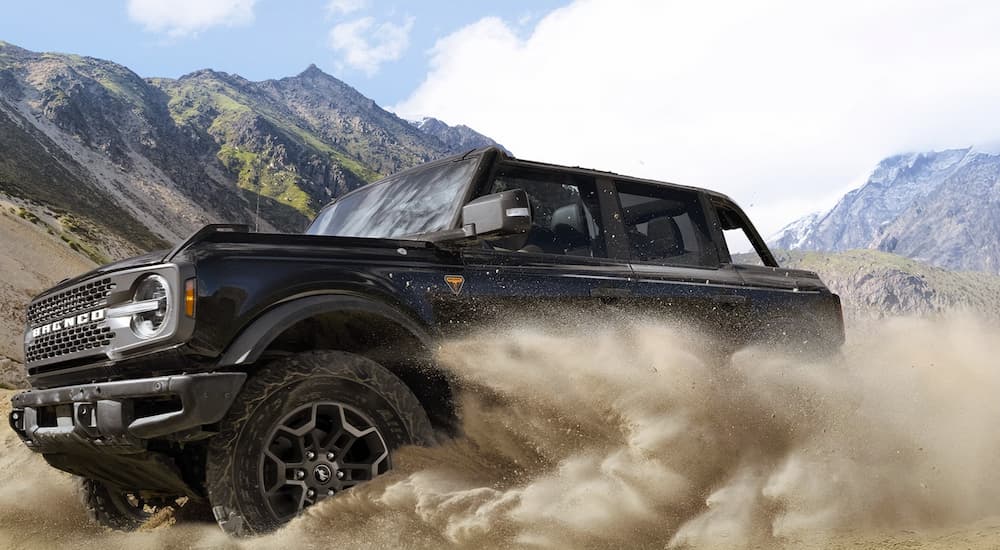
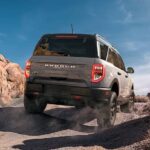
Our Recommendation: Ford Bronco Badlands Sasquatch
The Ford Bronco is one of the market’s most iconic nameplates, especially when it comes to off-road performance. The midsize SUV combines traction-enhancing hardware with generous ground clearance and upsized tires to give owners a huge advantage on the road less traveled.
The Bronco Badlands is built with an advanced 4WD system that’s designed to take some of the guesswork out of your next off-road outing. The system can automatically adjust the power sent to the front axle, so drivers can spend more time focusing on the trail and less time wondering when to switch between 2WD and 4WD settings. The system also includes a 4WD Low setting that provides additional torque for superior low-speed control.
The Badland’s available Sasquatch package gives drivers a big leg (or foot) up with a standard set of electronic-locking front and rear differentials, 35-inch all-terrain tires, a shorter final-drive ratio, and modified fender flares. Even the basic Badlands is replete with hardy off-road gear, including a seven-mode terrain management system with a dedicated Off-Road mode, skid plates, rock rails, and an upgraded suspension with Bilstein dampers.
Rocks and Extreme Terrain
Must-Have Features: Low-range gearing, locking differentials, body-on-frame design, ground clearance, underbody protection, generous approach/departure angles
While most modern SUVs and pickups can handle some level of off-road use, extreme conditions call for extreme measures. Whether you’re picking your way through a field of boulders or trying to scale a sheer rock face, you need an SUV that’s designed for the task.
Rock-crawling is among the more intense off-road activities, requiring low-speed precision and massive torque to conquer the immovable objects that stand in your way. Low-range gearing is key, as it multiplies torque at slower speeds, and locking differentials also play an important role.
The term “uneven terrain” takes on a whole new meaning in the world of rock-crawling, where drivers will often find one of those wheels losing contact with the ground entirely. This would lead to obvious issues if you’re dealing with an open differential, which would send all the power to the airborne wheel, leaving it uselessly spinning in place.
Good ground clearance can also make a big difference in preventing damage to important and expensive underbody components. There are two other measurements drivers should consider to ensure a successful off-road journey. A vehicle’s approach and departure angles determine how steep a grade it can handle without the front or rear bumper contacting the ground. This can make all the difference when climbing a hill, especially if you’re riding on a rocky surface.
Do you want to reduce the chances of a costly repair? A body-on-frame vehicle is a lot easier and cheaper to repair after a major impact. While the typical crossover SUV is built around a unibody design that’s often difficult to work with, the body-on-frame approach means each part can be addressed individually rather than repairing the entire structure.
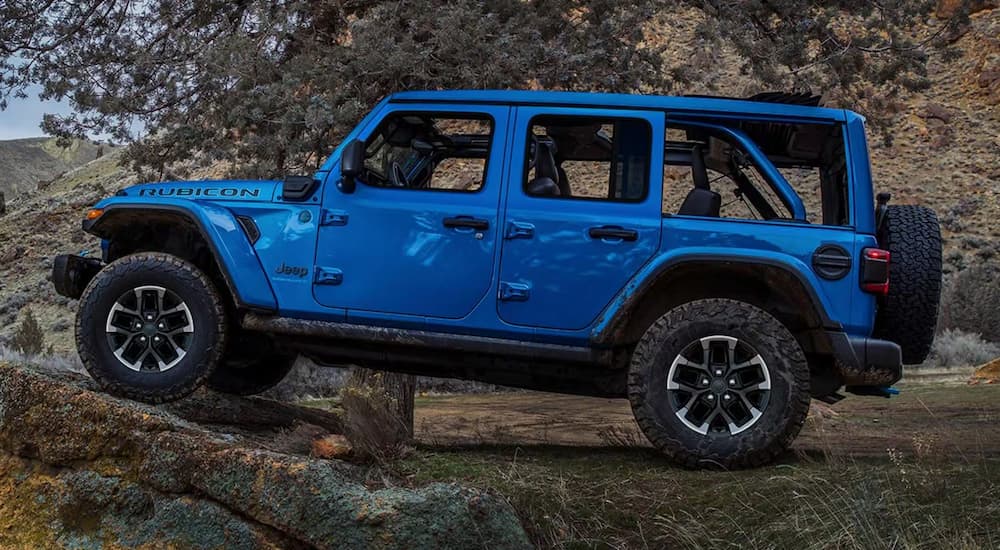
Our Recommendation: Jeep Wrangler Rubicon
The Jeep Wrangler has developed quite a reputation over the last 40 years. While it might not have been the market’s first off-road SUV, it traces its roots back to the original military-issue model and is largely credited with perfecting the formula for the mass market. The Rubicon trim represents an even more compelling take on the Wrangler formula, adding a long list of off-road-ready components that have made it the gold standard in the competitive segment. The Rock-Trac 4WD system is the star of the show, offering 4:1 low-range gearing that’s perfect for a controlled crawl.
The body-on-frame Wrangler Rubicon also comes with front and rear locking differentials and an electronic front sway-bar disconnect that allows for more axle articulation over uneven terrain. An ample 43.9-degree approach angle and a 37-degree departure angle help prevent unwanted contact with the ground, while rock rails and skid plates provide additional underbody protection.
A set of 33-inch all-terrain tires gives the Rubicon 10.8 inches of ground clearance. Adding the Xtreme 35 package replaces them with 35-inch tires wrapped around beadlock-capable wheels that can be aired down to provide a little extra traction on loose surfaces. Throw in a 1.5-inch suspension lift, and the Xtreme 35-equipped Rubicon floats some 12.9 inches above the ground.
Off-Road Adventure Awaits
We’ve covered some of the top picks in each off-road category, but what about a good, all-around option that can easily shift between different applications? The truth is that it’s difficult to recommend a universal solution without a little extra context. While the Outback Wilderness can comfortably perform both on and off the road, it lacks some of the heavy-duty gear required when the going gets tough. The Jeep Wrangler Rubicon occupies the other end of the spectrum, offering unparalleled off-road performance but lacking the comfort and efficiency drivers demand in a daily driver.
The Ford Bronco probably represents one of the more versatile options, especially when you consider the SUV’s expansive trim ladder. The Badlands made the list thanks to its well-rounded appeal, but most Bronco models provide a sufficient off-road setup when paired with the available Sasquatch package. If you’re looking to enjoy a little high-speed fun when you hit the trail, the Bronco Raptor adds a 418-hp turbocharged engine along with 37-inch all-terrain tires, Fox shock absorbers, and a heavy-duty rear axle.
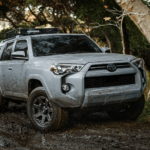
If reliability is a must-have feature in your next off-road model, there’s always the Toyota 4Runner. The automaker’s reputation for dependability can be a major selling point in the rough-and-tumble world of off-road driving. Toyota offers buyers plenty of options with five dedicated off-road trims, including a new Trailhunter model aimed at the overlanding niche.
At the end of the day, drivers just need to remember one thing when choosing their next off-road vehicle. Base your decision on the specific equipment that matches the off-road terrain you plan to tackle, and you’ll be able to enjoy miles of stress-free, off-the-grid fun.