Nissan has held a very special place in my heart for as long as I can remember. In my childhood years of gaming, I was always drawn to the Nissan Silvia, the Z-cars, and that iconic Calsonic R32 Skyline. My first car was an S13, and now, almost 20 years later, I still can’t seem to let it go. I love reflecting on the shimmer of those golden years, but if I’m honest, Nissan seems to have drifted off course over the last couple of decades. They’ve made a few compelling cars, but nothing that seems like it was designed with a real driver in mind. Recently, there have been a few whispers here and there that restore my hope that they’re trying to win us back.
Nothing is concrete, and the pieces are far from falling into place. There are massive risks, but there does seem to be hope. Strong indications of an Xterra revival, the Z NISMO offering a manual option, the Q50, though discontinued, continues to live on in the background, and a fresh tone from the new CEO gives me reason to think that something is stirring. The future for Nissan enthusiasts could be bright, but it could also snuff itself out in a hurry. Let’s walk through it, and I’ll show you where I’m finding hope and where I’m finding doubt.
The Xterra – An Offroad Revival
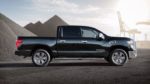
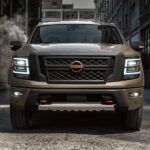
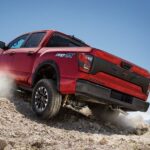
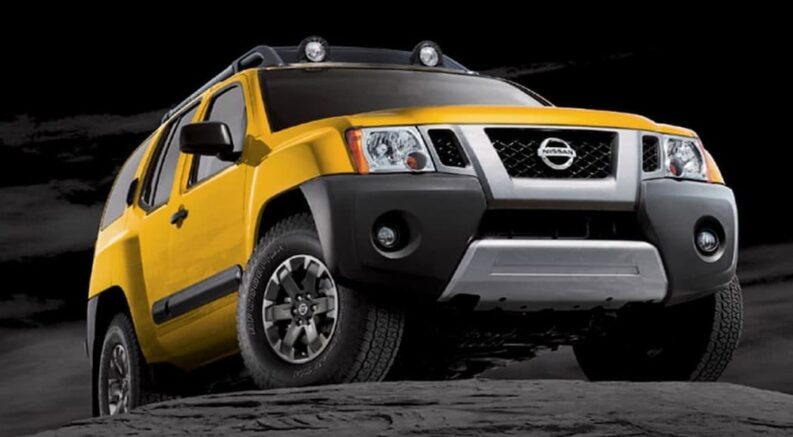
If I’m telling you the truth, when they announced an Xterra revival, I rolled my eyes harder than anyone hearing that news could imagine. Automakers throw out nostalgic names all the time and rarely deliver on them. What makes this one seem a little more realistic is the timing. Off-roading and overlanding are all the rage right now, with things like the Bronco, 4Runner, and Wrangler booming in the market. Nissan currently offers the Frontier Pro-4X with a comprehensive list of accessories, and it appears they have some rugged intentions for the Pathfinder Rock Creek-style trims. Neither of those captures the pure, analog, “go out there and live in your car in the woods” aesthetic that the original Xterra embodied.
What makes me optimistic is the weight that the Xterra legacy holds. Enthusiasts recall that the Xterra was designed for real-world use. They remember the roof racks, the light bars, the lift kits, and the low-cost modifications. If Nissan truly wants to bring it back, they have a clear blueprint. Give us a Pro-4X version, or maybe even two — one built for off-road, and one that’s more street-friendly. Set the price so that dedicated drivers — not just SUV shoppers — can afford it.
Of course, I don’t expect Nissan to flip the script and pump out the perfect Xterra revival overnight. Their teams have to validate demand, manage expenses, and ensure that it wouldn’t eat into any other parts of their portfolio. There are all sorts of things that could halt this quickly, but to me, it’s one of the more exciting rumors on the table.
A Manual Z Car
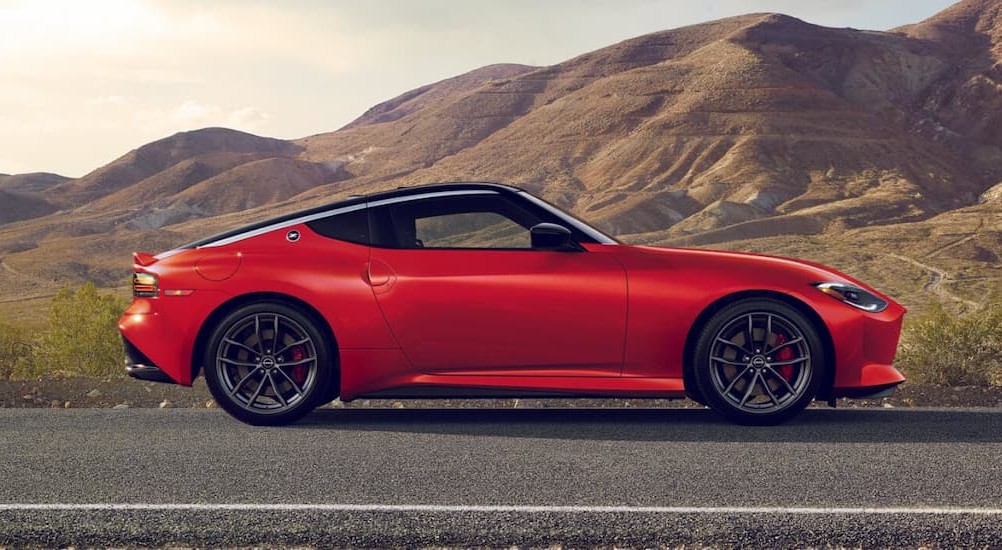
I don’t need to sell you the new Z. It’s already out there, turning the heads it’s meant to turn. The styling is rooted in heritage, the twin-turbo V6 is a nice callback to the Z32, and the fact that it’s rear-wheel-drive signals that they’re at least listening to someone. However, the most exciting aspect is that the 2026 Z NISMO comes with a manual transmission.
In 2025, there will be only a handful of cars still offering manual gearboxes. Committing to a three-pedal setup — even on a niche performance trim — is Nissan making a statement? It says that they haven’t forgotten that people actually want to drive. The Z NISMO transmission isn’t a simple compromise or afterthought. It seems purpose-built for people who crave that connection between car and driver — man and machine.
This matters more than most people realize. It’s one thing to build a big, flashy EV supercar or a concept car. It’s something else entirely to build a car that rewards skill, punishes mistakes, and gives you feedback in every sense. If Nissan can deliver the sort of experience that people are looking for in the Z and build credibility around it, that will have a ripple effect across the brand.
Infiniti Q50 – The Quiet Competitor
The Infiniti Q50 has been quietly coasting in the background for a few years now, but I think it deserves a mention in this conversation. I see something in it that reminds me of what Nissan’s ‘middle ground’ should be. The Q50 Red Sport — with its twin-turbo V6 and performance trim — isn’t a halo car. It’s not a headliner for any magazines, but for someone who wants a daily driver that still stirs the soul, it hits a sweet spot.
The Q50 isn’t begging for attention, either. It doesn’t necessarily scream ‘show car’. It isn’t the wildest expression of performance, but it’s still enough to remind us that Nissan/Infiniti cared about Japanese performance sedans at one time. If Nissan leans back into sedans with personality and a touch of flair, the Q50 could end up being the bridge between its past and future.
The Espinosa Era
This is where things get a little more real. On April 1, 2025, Ivan Espinosa stepped into the role of Nissan CEO. The encouraging part? Espinosa isn’t an outsider or a newcomer—he’s someone already familiar with the company’s culture and operations. He has worked closely with Nissan in product planning roles for years. That means he has a solid grasp of what goes into the product and has been along for at least a portion of the journey that has taken the company where it is today.
He gave several interviews after his appointment and never shied away from uncomfortable realities. Nissan is facing financial difficulties, undergoing restructuring, and key internal programs are currently under review. Espinosa has already begun cutting production capacity and simplifying operations, and advanced development and post-FY26 vehicle projects have been temporarily paused to streamline development.
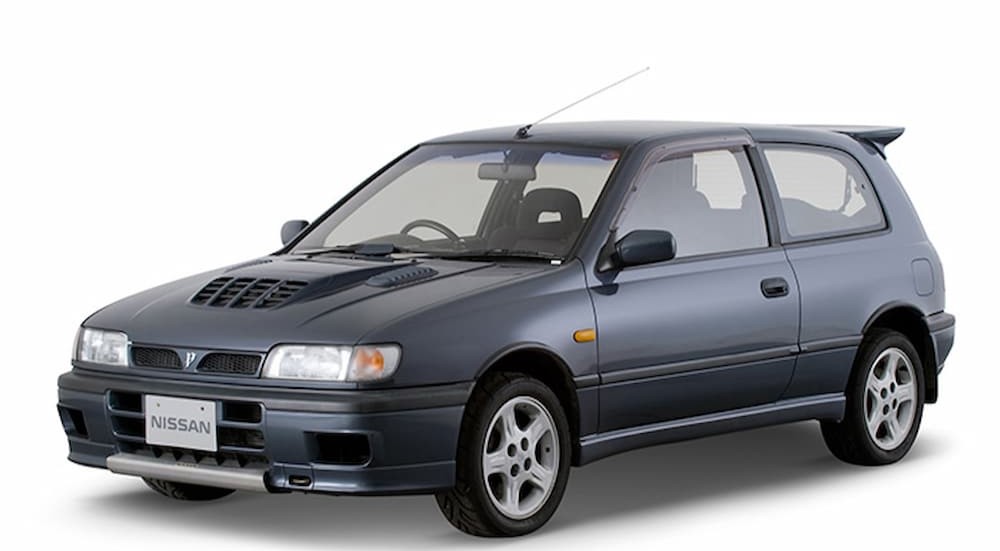
In the midst of all the corporate-speak, one main theme stood out to me in nearly all of his interviews: he wants cars with ‘clear character’ — think S-chassis cars, refined Z cars, even something like the Pulsar GTi-R, which had character. Espinosa has made several statements that signal his beliefs about the company’s longevity. He believes that focusing less on chasing volume and short-term financial goals and more on building cars that people emotionally connect with will ultimately be the manufacturer’s saving grace.
Here’s the real draw: leadership sets priorities. If the CEO truly values emotional resonance, brand character, and performance, the decisions and trade-offs at the lower level tend to align with those values. If Espinosa pushes for fewer, stronger models, he could free up resources to build cars that matter — not just those that sell in volume. It’s by no means a guarantee, but it’s at least a start to a firm foundation.
Hope vs Hype
It would be dishonest to say there were no risks. Nissan is restructuring in a major way. Production plants are being shaken to their core, resources are being diverted, and the company is playing defense in multiple markets. Espinosa’s pause on new model launches is an attempt to catch up internally.
Not to mention, building exciting, niche cars is a costly endeavor. It also weighs on your engineering bandwidth and runs the risk of being a low-volume mistake. If Nissan overspends or misreads enthusiast demand — two things it has a history of doing — it could backfire in a big way. The line between “enthusiast halo” and “bread-and-butter viability” is razor-thin.
We also need to consider the competition. Toyota and Honda have gained significant momentum with vehicles like the Toyota GR Corolla and the recent Honda Prelude revival, and the EV market is accelerating. Enthusiasts and buyers alike expect more than just raw power. They expect cutting-edge software, adaptive dynamics, hybrid performance — all the new paradigms. Nissan must deliver in several more dimensions now than it did in decades past.
The Q50 is aging quickly. The Z has been well-received, but it still has plenty to prove in terms of reliability and longevity. With hopes for the Xterra revival, enthusiasts are dreamers at heart, but we also need cold, hard evidence.
Slow Burn, Strong Return
As much as I would love it, I don’t expect Nissan to become the dominant enthusiast brand of the decade — not without some sort of divine intervention anyway. What I do expect is a slow, deliberate rebuild. A couple of affordable sports models, small but true off-road platforms, and optimization of existing lines. Fewer products will result in a stronger and more easily defined identity.
It isn’t about how many enthusiast cars Nissan launches, but which ones it launches. A well-executed, and fanbase-inspired Xterra, a sharpened Z NISMO, and something refined to carry on the Q50 ethos. Such moves could gradually change perceptions. If Espinosa truly values character over just cutting costs, I believe Nissan could regain its past renown and relevance among enthusiasts.
Not Out of Gas Yet
So, where does that leave us? I’m optimistic, but that could be my emotional bias showing. I’m also very cautious about getting my hopes up. There’s enough positivity in what the brand is doing to make me believe that it could be a pivot point into a new and brighter future. The manual gearbox in the Z tells me that they can still hear us — regardless of how often they listen. The Q50 hanging on after so many cuts have been made tells me that they haven’t given up on the performance sedan market either. Rumors of the Xterra resurrection suggest that they know where the off-road momentum is; they just have to make the move while the wave is still rideable. Ivan Espinosa has the background and the product-first instincts to turn things around, and his statements signal a new approach in doing so.
It’s not a guaranteed comeback, and there’s plenty of work to be done — financial, organizational, and competitive. But for the first time in a while, as a Nissan guy, I’m more excited than apathetic. For those of us who really care about how a car feels, and not just an A-to-B commute, Nissan is creeping back into the conversation. That alone is enough to keep me watching their next moves closely.