Subaru might be best known for its popular crossovers like the Forester, Outback, and Ascent, but the Japanese brand also boasts an impressive track record with more performance-minded models. Take the Impreza, for example. Subaru’s compact is one of the most successful and iconic cars in the history of the World Rally Championship (WRC), logging six titles and countless individual trophies over its 30-plus years.
Sadly, Subaru retired from the WRC in 2008, but that doesn’t mean the brand has lost its edge in performance. In fact, Subaru spun the Impreza’s WRX trim off into its own standalone model, with the AWD sedan joining the fray back in 2015. Now in its second generation, the Subaru WRX has become one of the market’s most affordable options for enthusiasts looking to enjoy a fun, engaging ride that still offers plenty of practicality for everyday driving.
Of course, the WRX isn’t the only Subaru designed to provide a dynamic experience when you slide into the driver’s seat. The Impreza still makes a compelling pick for the RS trim, but the Subaru BRZ is the WRX’s closest competitor. Developed in collaboration with Toyota (which markets its own version as the Toyota GR86), the RWD coupe represents a very different take on the modern performance model. While the WRX is designed to maximize power with its turbocharged engine and AWD design, the BRZ aims to deliver a more balanced ride that rewards technique and promotes driver engagement. While both vehicles have some promise, they’re ultimately aimed at very different drivers. Which Subaru is best for you, and how do the WRX and BRZ compare in terms of performance, utility, and personalization potential? We’ll weigh each of these factors as we explore two of Subaru’s most thrilling models.
Enjoy Easy Power With the WRX
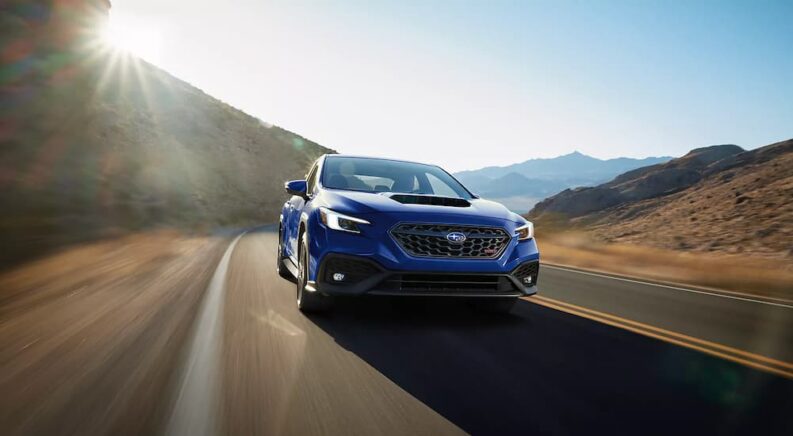
The WRX is built on a simple premise: the more traction a car can generate, the faster it can go. Subaru has based every engineering decision around this concept, starting with its AWD powertrain. Like every Subaru model outside of the BRZ, the WRX is equipped with a standard AWD setup across the entire trim ladder. When applied to Subaru’s crossover models, this AWD design enhances off-road performance and delivers a more predictable ride in harsh winter weather, but it serves a slightly different purpose in the WRX.
You don’t need an advanced engineering degree to understand the performance-related benefits of an AWD powertrain. Routing the engine’s power to twice as many wheels means that the WRX effectively eliminates the wheelspin that plagues many FWD and RWD models when they attempt to launch off the starting line. The result is a 5.4-second zero-to-60-mph time that you won’t soon forget.
The WRX’s AWD design also pays dividends in cornering. By sharing the load across all four wheels, the WRX delivers more usable power when exiting turns. This all results in a responsive, predictable ride and more stability at high speeds, not to mention a safer experience when encountering snow and ice.
Then there’s the engine. A 2.4L turbocharged Boxer-4 engine produces 271 hp, which is more than enough to motivate the compact model. While a naturally aspirated engine requires a lot more time to reach its peak potential, the WRX’s turbocharged design means that power arrives earlier and sticks around for as long as you need it. These performance benefits do come at a cost, mostly added weight and reduced fuel economy, but it’s a small price to pay for the sort of fun that the WRX can provide.
That said, it’s the WRX’s impressive torque, not its raw horsepower, that really makes the difference in performance. A turbocharged engine is perfect for producing the low-end torque required for a speedy start, and the WRX doesn’t disappoint, with 258 lb-ft to its name. That figure places the WRX right towards the top of the performance sedan segment, matching the VW Jetta GLI and eclipsing the Civic Si and its 192 lb-ft by a wide margin.
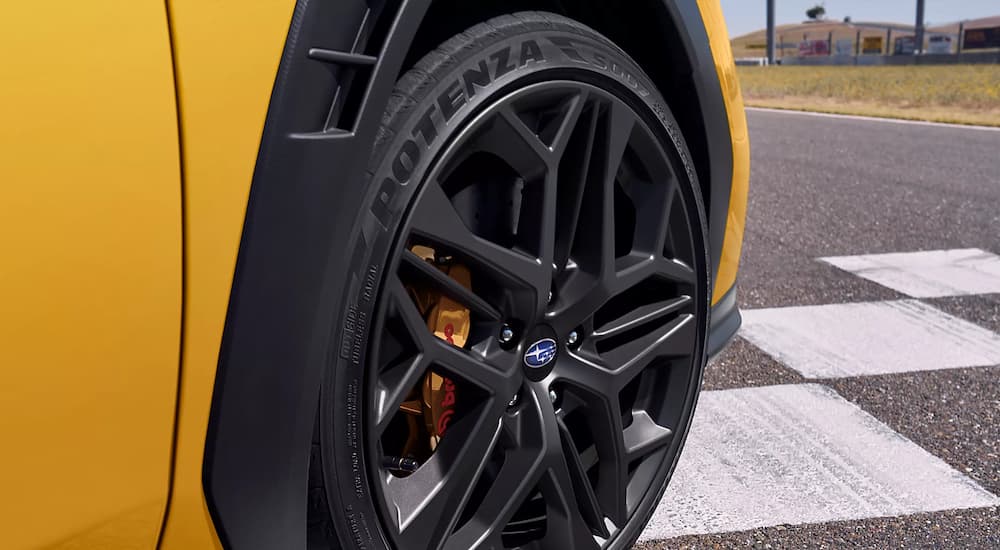
In addition to its turbocharged engine and AWD design, the WRX also features a set of wide, sticky summer tires, an enhanced suspension with adaptive dampers, and race-ready Brembo brakes. A six-speed manual transmission gives drivers all the control they could ask for, though a continuously variable transmission (CVT) is also available for those who prefer a more hands-off experience.
Become a Better Driver With the BRZ
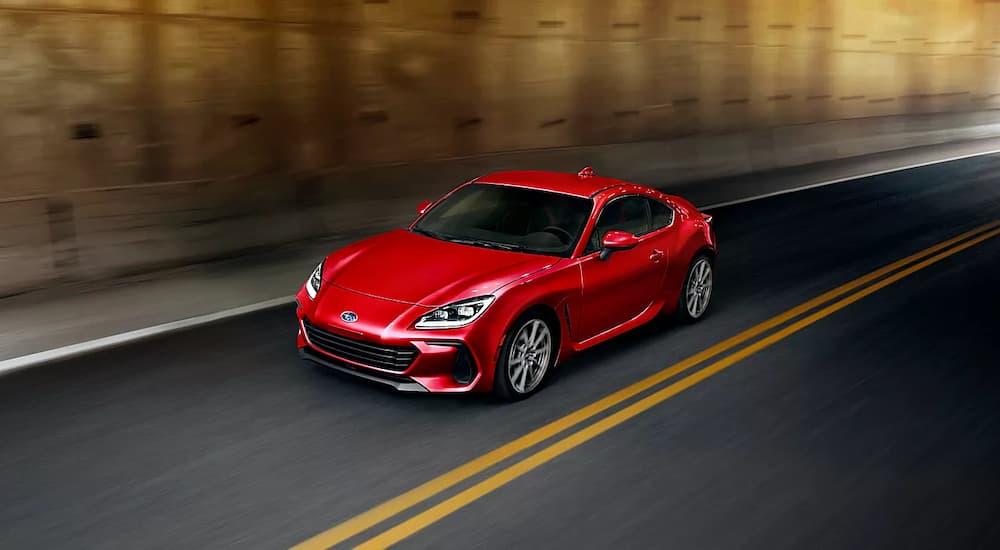
The BRZ takes a very different approach to maximizing fun behind the wheel. While acceleration and top speed are the name of the game for the WRX, the BRZ prioritizes balance, handling, and engagement above all else. The fastback coupe is the very definition of a driver’s car, employing a lightweight, RWD design that rewards a skilled operator who knows their way around a track. Weighing in at just 2,860 lbs, the BRZ is some 20 percent lighter than the WRX.
The WRX and BRZ are powered by similar 2.4L Boxer-4 engines, but the coupe ditches two doors and the turbo for a more linear throttle response. The BRZ is still no slouch, making 228 hp and 184 lb-ft of torque without the turbo. It also ditches the brand’s signature AWD setup for a RWD design that’s designed to improve steering feel, driver involvement, and weight distribution with a 50/50 split between the front and rear.
The BRZ is a lot less forgiving than the WRX, and trails behind the larger model in terms of both horsepower and torque, but the BRZ can unlock a new level of enjoyment if you can get over the initial learning curve. The BRZ’s strength lies in its simplicity, while the WRX uses technology to create a faster, more forgiving ride. While the WRX is designed to be relatively foolproof, with an AWD setup that compensates for the clumsy inputs of a less experienced driver, the BRZ’s true potential can only be unlocked by those familiar with the intricacies of throttle modulation, weight transfer, and proper racing lines.
Let’s use a simple, right-hand turn as an example. Ideally, a driver will subtly brake and turn in as they enter the turn, find the apex in the middle of the corner, and then unwind the wheel and apply the throttle as they begin to exit. Failing to precisely complete each step can result in a significant loss of momentum, while pulling off a precise turn can shave seconds off your personal best. The WRX can compensate for a less skilled driver thanks to its AWD traction and turbo torque, but the BRZ requires a deft touch.
This raises an important question. Why would anyone choose the BRZ when the more powerful WRX represents the easier option? To quote an old maxim, the greater the struggle, the greater the reward. Once you master the ins and outs of the BRZ, you’ll be able to enjoy an engaging, responsive experience that can almost start to blur the line between man and machine. It’s also much more affordable than many of its peers, with a starting price only slightly higher than the WRX. This combination of low weight and low price has worked wonders for the Mazda MX-5 Miata, though the BRZ represents a much more practical alternative, with its larger interior and trunk, as well as a solid roof. The BRZ provides a more balanced ride than its Mazda rival, offering near-perfect balance, improved stability thanks to its longer wheelbase, and consistent track day performance. It’s also no problem to take a BRZ to a track day, while some organizations might not accept a Mazda MX-5 Miata because it’s a convertible.
Which is Right for You?
We’ve touched on some of the key differences between Subaru’s sportiest options in the WRX and BRZ, but which one is right for you? Each model has its own pros and cons, but the choice ultimately depends on the driver’s lifestyle and what they expect from their automotive investment. If you’re seeking a daily driver that offers plenty of passenger and cargo space, along with an AWD setup that can power through tough winter weather. The WRX is the clear pick with its five-passenger capacity, larger trunk, and improved ground clearance. It also provides a more comfortable ride on longer road trips. Parents will appreciate the extra set of doors, especially when it’s time to fit a child seat in the back row. The WRX is the more well-rounded of the two Subaru models, offering a pleasant balance of performance, practicality, cargo space, and AWD power. It’ll also let drivers live out their rally car dream every time they step behind the wheel.
The BRZ’s modest size and enthusiast-focused design might limit its appeal to those who need a more versatile daily driver. However, as a fun weekend toy, it’s tough to beat. The latest in a proud tradition of affordable compact sports cars, the BRZ is here to prove that a RWD powertrain and lightweight design can easily make up for a lack of pure horsepower of an iconic European badge. Driving the BRZ can be more rewarding for an enthusiast than the WRX, because it takes skill rather than power to drive it quickly. Its lower performance figures may look worse on paper, but can provide a better experience to the right driver.
Ultimately, the WRX is perfect for those in the market for a practical car that also offers some performance potential, while the BRZ is a performance vehicle that treats practicality as an afterthought. Neither approach is inherently better, but a quick test drive at your local Subaru dealership should help you narrow down your options.