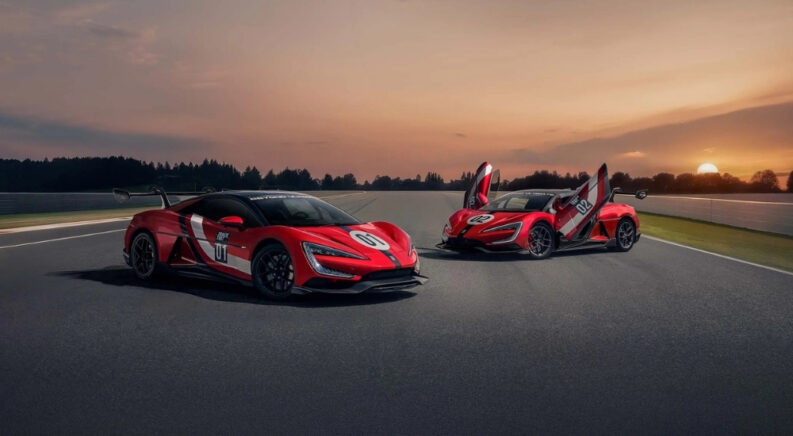
The title of “world’s fastest production car” just changed hands, and it could signal a massive shift in the automotive landscape. The YANGWANG U9 Xtreme left a little burnt rubber all over the history books in mid-September when it posted a top speed of 308.4 mph at Germany’s Automotive Testing Papenburg (ATP) track. The newly minted hypercar also cemented its status as the most track-capable production EV just a month later, when it took to the famed Nürburgring Nordschleife and completed a lap in just under seven minutes.
If you’re not familiar with the YANGWANG brand, you’re not alone, but that might not be the case for too much longer. Western Europe was once the epicenter of automotive exclusivity, with brands like Bugatti, McLaren, Ferrari, Lamborghini, Aston Martin, and Porsche ruling the roost. However, that’s steadily changing as an increasingly affluent Chinese market sees homegrown brands churning out alternatives. A subsidiary of China’s largest automaker and the world’s most prolific EV brand—BYD Auto—YANGWANG was only launched in 2023. But its luxury credentials are already on par with established European brands, with the average cost of a new model hovering around $150,000.
While initially focused on producing affordable, accessible, and Earth-friendly models, Chinese automakers have steadily become a force to be reckoned with in the luxury and performance segments. The YANGWANG U9 Xtreme is just the latest example of the country’s automotive ambitions, and it goes a long way towards illustrating the performance potential of the all-electric approach. Let’s take the new record-holder for a spin, explore the rapid evolution of the BYD brand, and learn how the Chinese market is setting the pace in the performance segment.
Rising In the East
BYD easily dominates the Chinese market and has dramatically increased its presence on the world stage to snag the #4 spot in terms of global sales with over 4.2 million units moved in 2024 alone. So how has BYD grown into one of the world’s most prolific automakers in just a few years? The company’s success can be attributed to its commitment to vertical integration. BYD was an early leader in EV battery production and has leveraged that experience and production capability to power its meteoric growth.
The company also produces many of its own microchips through its BYD Semiconductor subsidiary, which gave the brand a major advantage when supply chains were interrupted. While many automakers were forced to temporarily shutter factories or leave models half-finished due to a lack of microchips and other parts during the Covid-19 pandemic, BYD was able to weather the storm and make some major gains at a time when its competition was relatively stagnant.
BYD also benefits from a close relationship with the country’s ruling party. Unlike China’s “Big Four” auto brands—SAIC, FAW, Dongfeng, and Changan—BYD isn’t directly owned by the Chinese government, but it has received some massive support in the form of subsidies and loans. Strong domestic demand has also driven BYD’s growth, and the brand is aggressively moving into the international market as a major exporter of electric buses, taxis, and cars to Europe and Latin America (it has even sold hundreds of electric buses here in the United States).
This sort of fast-paced growth is nothing new for China. Chinese brands have always performed well on the domestic market—which is fertile ground with over 1.4 billion potential buyers—but they are now finding similar success on the global market. At the turn of the millennium, China was producing around two million vehicles annually; however, that all changed when China officially joined the World Trade Organization (WTO) in 2001, marking the beginning of year-over-year sales growth of approximately 21 percent. By 2008, China was the world’s largest auto producer, and while the days of double-digit growth are in the rearview mirror, it doesn’t look like things will be slowing down anytime soon.
Taking Performance to the Xtreme
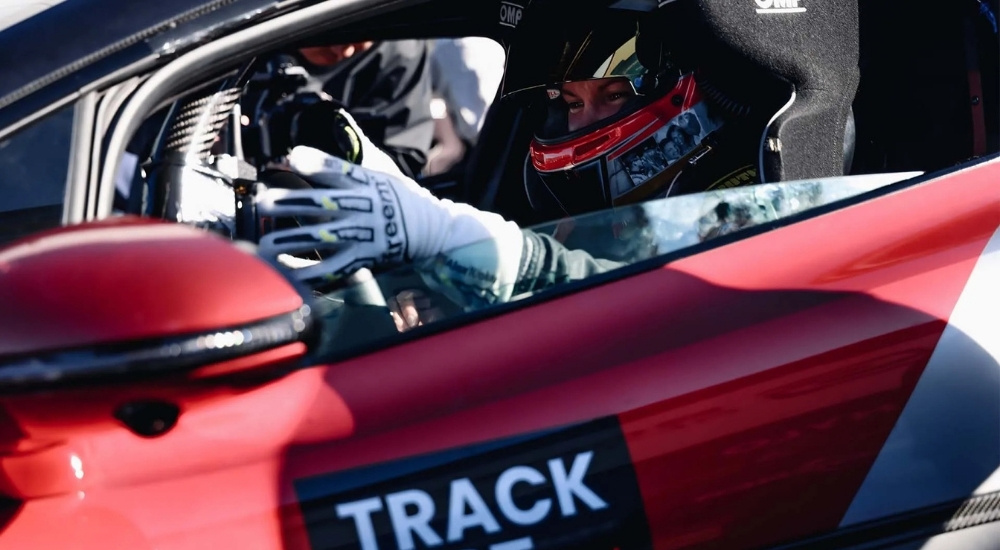
BYD has pulled out all the stops to give the U9 Xtreme every advantage at the track. While most production EVs pack one or two electric motors, the U9 Xtreme’s quad-motor design speaks to its high-speed intentions. Each motor is capable of producing 744 hp for a combined output of over 3,000 hp, but it’s not the sheer number of motors that makes the Chinese hypercar such a speed demon. YANGWANG has engineered the motors to spin at up to a staggering 30,000 RPM. That’s 50% higher than the 20,000 RPM limit of Tesla’s motors in the Model S Plaid, and it speaks to the spirit of innovation that defines the YANGWANG brand.
While the standard U9 is built around an 800-volt EV architecture, the Xtreme version employs a 1,200-volt system that ensures the model is never hurting for power. This 1,200-volt platform enhances the U9 Xtreme’s electric bandwidth, reduces heat buildup by up to 67%, and allows its regenerative braking system to recoup energy at a rate of over 700 kW, thereby reducing wear and tear on the traditional brakes. BYD’s proprietary Blade battery uses a lithium iron phosphate formula rather than the nickel manganese cobalt approach found in high-end models, as it can better manage the extreme thermal stress involved in such incredible performance.
The U9 Xtreme’s motors, battery, and electric architecture might grab much of the attention, but the hypercar also rides on an innovative e⁴ platform that uses the brand’s exclusive individual wheel drive (IWD) technology to significantly improve high-speed performance. An independent torque vectoring system is designed to read the road and compute a wide range of data to keep you firmly planted on the asphalt, even at higher speeds. The result? An EV that can automatically adjust its torque output by more than 100 times every second.
The YANGWANG U9 went viral in mid-2025 when a video demonstrating its unique ability to “bunny hop” over potholes started to make the rounds on the internet. While it has all the hallmarks of a marketing ploy, the groundbreaking feature can actually have a major impact on the model’s high-speed performance. The active suspension system can apply 9 kW of force to each wheel in an effort to reduce the extreme pitching, diving, and body roll that come with aggressive cornering, braking, and acceleration.
YANGWANG U9 Xtreme vs Bugatti Chiron Super Sport
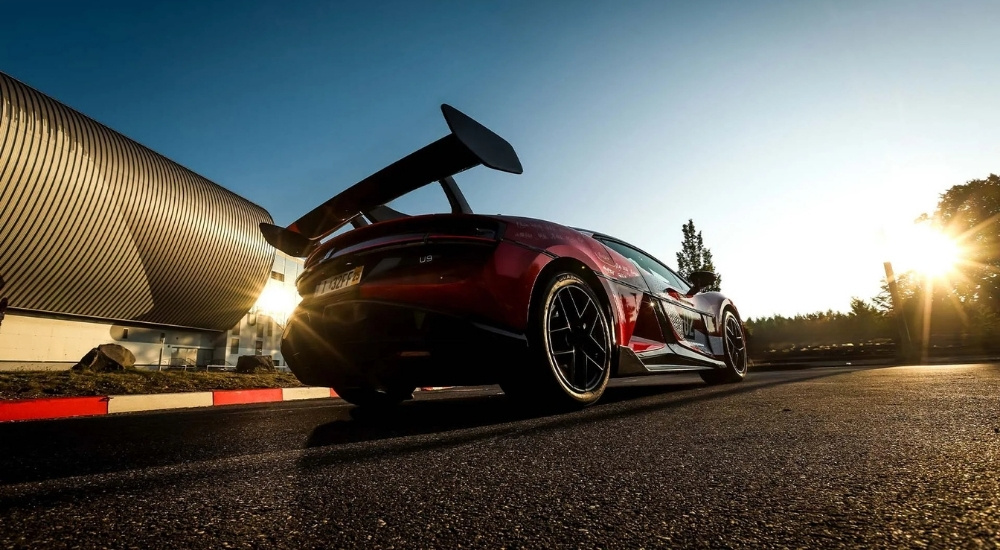
The Bugatti Chiron Super Sport has long been the king of the hypercar segment. The rarefied French model was the first production car to break 300 mph, and famously bested a Rafale fighter jet in a series of short sprints thanks to its ability to accelerate from zero to 186 mph in 12.1 seconds. Sadly, every reign must come to an end, and the 16-cylinder monarch was quietly dethroned at a German track in late 2025. The Chiron met its Waterloo at ATP as the U9 Xtreme set a new speed record for production models at 308.4 mph, blowing away the Bugatti’s 304.8 mph record and announcing itself as the new ruler of the hypercar scene.
If that sort of speed flies in the face of your preconceived notions around electric vehicles, you simply haven’t been paying attention. The instant acceleration afforded by an all-electric powertrain gives today’s EVs some serious performance potential, especially when it comes to acceleration. In fact, the list of the world’s quickest production vehicles is dominated by electric models like the Rimac Nevara, Porsche Taycan Turbo GT, Lucid Air Sapphire, and Tesla Model S Plaid.
Like the Chiron, the U9 Xtreme will have an extremely limited production run that throws the term “production model” into question, as BYD will limit production of the high-performance variant to just 30 units. Although the brand hasn’t announced the official price, the non-Xtreme version’s $250,000 price tag, combined with the fact that the Bugatti Chiron Super Sport retails for around $4 million, suggests a multi-million-dollar MSRP. That’s no small chunk of change, though it is a bargain when compared to a slower option like a $100 million Rafale fighter jet.
How does the new leader of the hypercar class stack up against its predecessor in the Bugatti Chiron? In all honesty, it’s not even close. The U9 Xtreme not only bested the Bugatti’s record-setting top speed by 4 mph; it also outclasses its French rival in every other metric by which today’s hypercars are judged. The U9 Xtreme’s under-two-second zero to 60 mph time shaves roughly half a second off of the Chiron’s sprint time, and it offers significantly more horsepower thanks to its quad-motor setup. Four electric motors allow the YANGWANG to churn out over 3,000 hp, making the Bugatti’s 1,600 hp seem relatively pedestrian.
A Growing Reputation
The U9 Xtreme might be YANGWANG’s most newsworthy model, but the rest of the lineup does give the hypercar a run for its money. The full-size U8 SUV is designed to take on the Range Rovers of the world, and certainly offers a lot in the way of off-road performance with its e⁴ platform and the ability to float in water for up to 30 minutes. YANGWANG also markets a long-wheelbase version of the U8 and has recently welcomed its fourth model, a full-size luxury sedan dubbed the U7, which is available as either an electric vehicle or a plug-in hybrid.
The YANGWANG U9 Xtreme’s high price and impractical design are two major roadblocks in terms of accessibility, but it’s important to remember that the hypercar is basically designed to serve as a 3,000 hp press release. BYD knows that a vast majority of drivers will never get the chance to step behind the wheel of the world’s fastest production car, but simply claiming that title allows the automaker to position itself as the new standard-bearer for the modern automobile market. It’s an exciting time in the car world, with emerging EV technology and increased international competition opening the door to a new era of efficiency and performance.