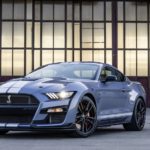
In an era of increasingly electrified models, there have been some notable holdouts. Ford has become a leader in the hybrid and EV segment, but one of the brand’s most storied badges has managed to resist the current electric trend. Ford invented the pony car segment with the debut of the Mustang back in 1965. Still, while it’s steadily integrated some of the latest automotive tech into the model, you won’t find any electric motors or batteries under the hood, with the exception of the standard 12-volt unit.
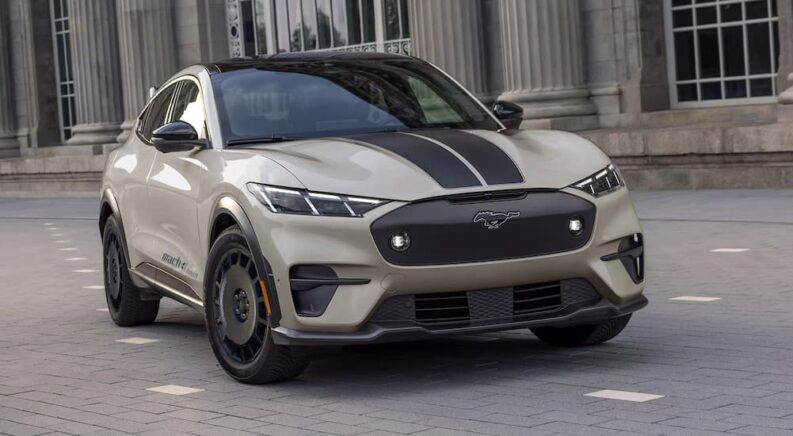
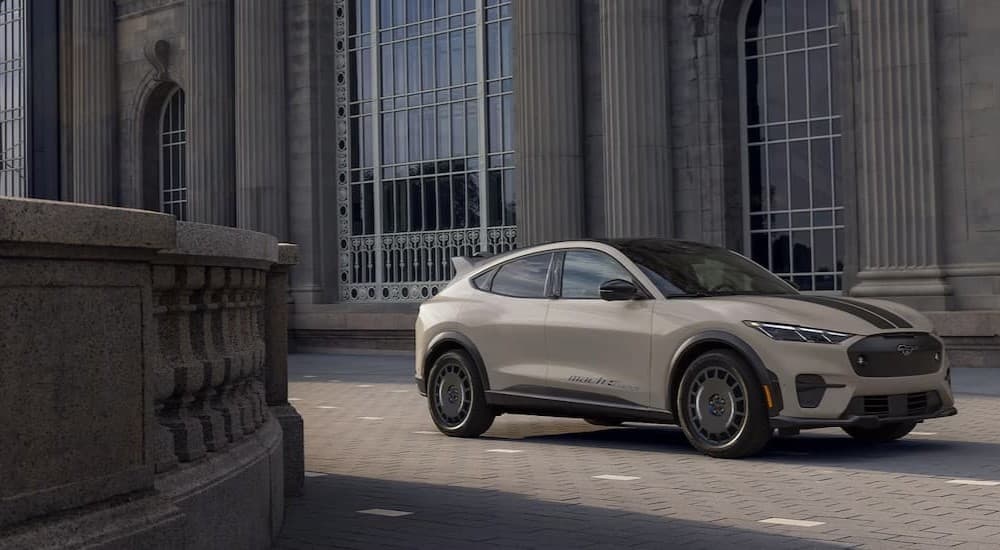
Drivers would be forgiven for thinking that they’ve already seen an electrified version of the popular pony car at their local Ford dealer, but it’s more of an homage than a bona fide Mustang model. The Ford Mustang Mach-E might share a name with the classic model, but the EV employs a crossover design that, while sporty and stylish, doesn’t quite live up to the high bar set by the original Mustang. However, the Mach-E might soon gain some company as rumors of a hybrid Mustang continue to circulate through the market.
Ford is reported to be testing a mysterious new “S650E” model that seems to be a new hybrid Mustang, which would align with some of the brand’s stated goals around electrification. Rumors of a hybrid Mustang date back as far as 2017, when Ford announced plans to spend some $700 million to retrofit the car’s Flat Rock Assembly plant to produce a hybrid model, but that never came to pass.
As we await more details on the potential hybrid Mustang, we thought it would be a good time to review the intel we do have and consider a few other ways in which Ford might look to modernize the model. From a hybrid powertrain to the possibility of an EV, a new EcoBoost V6, or even the long-prophesied AWD model, read on as we explore the future of Ford’s most famous car.
Exploring the Current Mustang Powertrain
Before we dive into the question of the Mustang’s future and a potential hybrid model, let’s take a brief moment to see how the car’s current powertrain performs.
The standard trim is actually named after its EcoBoost engine, which delivers 315 hp and 350 lb-ft of torque. The I-4 engine manages to squeeze that much power out of its relatively modest 2.3L displacement thanks to an integrated turbocharger that leverages the power of forced induction to up the fun factor. It’s a solid start, but for many pony car purists, there’s just no substitute for a good old-fashioned V8.
Moving up the GT trim sees the EcoBoost engine swapped out for a Coyote V8 that’ll have you howling at the moon as you sprint from zero to 60 mph in as little as 4.2 seconds. The 5.0L engine is capable of generating 486 hp and, unlike the EcoBoost, can be paired with a six-speed manual transmission that offers improved control and a stronger connection between the car and the driver.
The range-topping Dark Horse trim features the same 5.0L Coyote V8, but a little tuning allows the engine to pump out an extra 20 ponies for a grand total of 500 hp. Throw in Pirelli P Zero Max Performance Summer tires, a MagneRide adaptive suspension, additional cooling, and a high-performance braking system, and you’ve got a track-ready Mustang with some incredible handling.
Those are some pretty compelling stats, which raises the question: can a hybrid Mustang possibly compete with the current gas-powered model, and are there other ways that Ford could seek to update the Mustang for the modern era? We’ll dive into that debate as we consider ways to keep the Mustang relevant in today’s increasingly electrified market.
Pioneering the Hybrid Route for the Mustang
Details around the so-called S650E—aka the Mustang hybrid—are still a little tough to come by, but there are some important clues we can glean from various press releases and general context. We’ll start with the name, which gives us a good idea about the timeline we might be looking at when it comes to the hybrid. That S650E designation might seem like a random moniker, but S650 is actually Ford’s in-house code for the seventh-generation Mustang. The “E” seems to allude to the electrified powertrain, but the fact that Ford is referring to the forthcoming model by the S650 code implies that we won’t be waiting long for the first hybrid Mustang.
When it comes to the Mustang hybrid, the question is not so much “if,” but “when.” Ford has committed to offering hybrid powertrains across the entire Ford Blue lineup (more on that later) by the end of the decade, but has otherwise been pretty tight-lipped about a specific timeline. The seventh-gen Mustang was only introduced in 2024, so it’s not unreasonable to think that the hybrid model could be rolled out as part of the pony car’s midcycle refresh in the next few years. There are reportedly some hybrid Mustang development mules—early prototypes—that have entered the Technology Prove-Out stage, but little else is known at this time.
What we do know is that a hybrid Mustang could actually be a boon to the car’s performance credentials, with its high-performance rivals serving as Exhibit A. Chevy already offered ahybrid version of its Corvette sports car in the E-Ray, which combines a 6.2L V8 with a hybrid powertrain to produce 655 hp. The new BMW M5 outdid the Corvette, with its own hybrid V8 configuration logging 717 hp. A seventh-generation Mustang hybrid based on the current Coyote engine would likely offer a similar level of performance.
There is one important detail that we’re still waiting on, and that’s whether the Mustang will employ a traditional hybrid (HEV) or plug-in (PHEV) design. Looking at current electrified offerings is a wash, as the Corvette E-Ray employs the HEV approach, but the M5 is exclusively available as a PHEV model. There’s no telling where Ford might land in the HEV vs PHEV debate, but the added convenience of a standard hybrid might make it the more practical option for those looking to jump to the hybrid segment with minimal lifestyle changes.
Calling on All Four Wheels for Enhanced Traction
While it might be the most intriguing development, hybrid technology is not the only way that Ford could radically alter the Mustang’s performance profile. There have long been rumors of an AWD version of the traditionally RWD model. But while the approach could have a positive impact on the car’s handling, stability, and traction, there are also some important downsides to consider.
First and foremost, there’s the matter of tradition. The Mustang has always been a RWD model, and the setup is particularly well-suited to the pony car’s performance focus thanks to the improved weight distribution that it can offer. It’s also pretty expensive to develop an entirely new powertrain and, in the case of the modern Mustang, would probably require Ford to reimagine the entire platform on which the model is built.
Then there are the performance considerations. An AWD system is typically heavier than a RWD setup, which would alter the Mustang’s power-to-weight ratio and impact fuel economy. Speaking of efficiency, AWD powertrains tend to lose a little extra power in the process of transferring energy between the engine and wheels, which means that an AWD Mustang with a more powerful engine could potentially be less powerful than some current RWD options. Taken together, these factors make it difficult to hold out hope for an AWD Mustang. However, the technology might become a little more viable should Ford introduce an electrified version of the pony car.
While integrating an AWD powertrain into a gas-powered model requires extensive engineering and complex components like central driveshafts, differentials, and transfer cases, turning a hybrid or EV into an AWD vehicle is often as simple as slapping an extra electric motor on the front axle (which is what Chevy did with the E-Ray). Again, there’s no indication that Ford is planning to create a Mustang EV, and a 2024 quote by CEO Jim Farley seems to douse any hopes for the time being. “We will never make an all-electric Mustang,” Farley said, clarifying that “we really do believe partial electric [hybrid] powertrains work well for performance drivers.”
Boosting the Engine Lineup With New Options
There seems to be a logical middle ground that we’ve yet to explore when it comes to goods under the Mustang’s hood. The I-4 EcoBoost and Coyote V8 represent great options on either end of the engine spectrum, but why not just split the difference with a V6 version of the turbocharged EcoBoost engine? Suitable options can already be found across much of the current Ford lineup, ranging from the Ranger’s 2.7L EcoBoost V6 with its modest 315 hp to the High-Output 3.5L EcoBoost V6 in the F-150 Raptor that provides 450 hp.
So why doesn’t Ford put one of these V6 options in the Mustang? Simply put, the V6 doesn’t do enough to differentiate itself from the optional V8 engine, and would potentially sap sales from the Mustang’s more profitable trims. An EcoBoost V6 could potentially outshine a naturally aspirated V8 in terms of performance, but would lack the hearty growl and all-important V8 cache that the larger engine can offer.
Drivers in the market for an affordable way to access the Mustang tend to be happy with the current I-4 EcoBoost, and the V8 diehards are always going to gravitate towards the larger engine. While a middle option might satisfy a small number of drivers, it’s simply not worth the development and production costs that would come with outfitting the Mustang with an entirely new engine.
A Mustang by Any Other Name: Embracing Evolution
Should the Mustang move past the classic V8 to welcome a new era of efficiency and electrification? Ultimately, that’s a matter of taste, but if recent history has taught us anything, it’s that hybrid and all-electric vehicles have come a long way from their eco-conscious roots. A decade of increasingly impressive hybrid and electric sports cars has proven that the technology can match the brawniest gas-powered engines in terms of pure performance, and even surpass the old-fashioned approach when it comes to agility and fun features like launch control systems and boost functions.
That said, it’s hard to see the Mustang giving up its V8 legacy until it’s legally forced to do so. That day might come sooner than some drivers would like to think, as increasingly strict government regulations force automakers to prioritize efficiency. Still, the end of the V8 epoch doesn’t mean the end of the Mustang as we know it. From hybrid technology to a potential EcoBoost V6 and even a possible EV model, there are plenty of paths forward for the Ford Mustang.