After years of development and speculation, Ferrari’s first all-electric vehicle is here. On May 25, 2026, Ferrari officially unveiled the production version of the Luce (Italian for “light”), adding another contender to a growing segment of the EV market. Production is already underway, with the first European deliveries expected towards the end of 2026.
Its introduction hasn’t been without controversy and resistance. Ferrari shares fell 8% the day after the Luce’s debut, and some rivals like Lamborghini have decried EVs as something that customers aren’t interested in. Furthermore, the Luce is a stylistic departure from Ferrari’s sports-car heritage, classified as an executive luxury car.
But regardless, the Luce has arrived, adding another chapter to Ferrari’s storied history. Being a fan of performance in all forms, that means it’s time for me to look at the Luce—not just how it stands as a Ferrari, but how it compares to the existing luxury EVs it will compete with. Join me for a trip down this increasingly populated EV road.
Breaking Down the Ferrari Luce
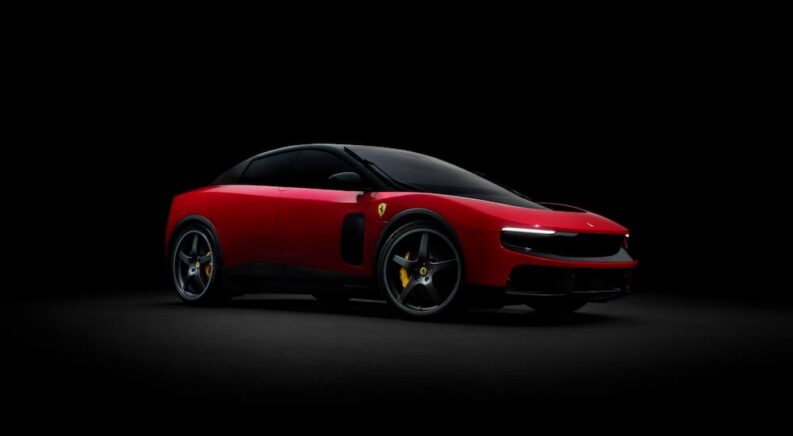
First things first: when you first set eyes on the Luce, it doesn’t exactly scream “Ferrari.” Gone are the low-sitting body, rear spoiler, wide curves, and other trademark attributes. Instead, apart from the Ferrari badge, the Luce frankly looks kind of generic—more like an affordable Chinese EV sedan. It’s also Ferrari’s first five-seat vehicle, eschewing traditional two-seaters.
This is less surprising when you consider that iPhone designer Jony Ive is responsible for the Luce’s appearance. It’s also what has drawn the most criticism by a mile. One collector derisively referred to the Ferrari Luce as the “Ferrari Loser,” and even Italy’s transport minister Matteo Salvini got a shot in, rhetorically asking, “This is supposed to be innovation?”
Then there’s the financial cost. Ferrari has never been known for cheap vehicles, and the Luce won’t change that. According to Reuters, this EV starts at 550,000 euros—roughly $625,000 based on the current exchange rate.
How the Luce Performs
All that said, beneath the undistinguished body, the Luce is most certainly a Ferrari performance-wise. Thanks to four independent electric motors, the Luce can produce up to 1,035 hp with standard AWD. That’s 45% more power than the V12 Purosangue, Ferrari’s first four-door car. A 122-kWh battery is expected to deliver 330 miles of range on the somewhat generous WLTP test cycle.
Despite the unspectacular aesthetic, the automaker says the Luce has the lowest drag coefficient of any street-legal Ferrari. The roofline is actually two inches lower than the Purosangue to slice through the air on the adaptive suspension. The reported 0-60 mph time is 2.5 seconds with a top speed of 193 mph, but some speculate the vehicle could be even quicker.
Inside, the Ferrari Luce combines vintage style with cutting-edge technology. The rear bench seat comfortably fits adults, and the 21-cubic-foot cargo area is by far the largest Ferrari has ever offered. Its front bucket seats are made from a mix of aluminum and glass with genuine leather upholstery. The gauge cluster merges physical needles with digital readings, and there’s a 21-speaker stereo system.

Going Head-to-Head With All-Electric Luxury
Now that you know more about what the Luce is and what it can do, it’s time for some friendly competition. I picked out five existing luxury EVs, ranging from more budget-minded models to high-end brands, to see how they match up against Ferrari’s first EV.
Porsche Taycan Turbo GT
Unlike some luxury and sport automakers, Porsche jumped into the EV world quickly, debuting the Porsche Taycan in 2019. Several variations have been released, including the GTS, Turbo S, Turbo GT, and Cross Turismo wagon, making it one of the most popular luxury EVs. But even the most powerful version has trouble matching the Luce spec-wise.
The Turbo GT produces 1,019 hp and has a 2.2-second 0-60 time but only tops out at 180 mph. The driving range is also comparable. Granted, Porsche builds in engine-like sounds, has legendary handling with Active Ride, and uses 800V fast-charge technology. Most importantly, the 2026 Taycan Turbo GT also costs about one-third as much as the Luce, starting at $243,700.
Lucid Air Sapphire
It may not have the brand recognition of European luxury automakers, but the Lucid Air has set the standard since 2022. Unfortunately for Ferrari, that doesn’t change. The top-end Sapphire trim still has more of everything at a lower price point—a relatively paltry $249,000.
For this, the Lucid Air Sapphire provides 1,234 hp, a 427-mile range on the more stringent EPA test cycle, 22 cu.ft. of cargo space, and leather seats. It surges from 0-60 mph in 1.89 seconds and can add 200 miles of range to the battery in only 15 minutes. Like the Taycan, Lucid also offers more drivetrain options than the Luce, making it more accessible to a wider range of buyers.
Lexus RZ 550e F Sport
This is the highest variant in the Lexus RZ EV crossover series, and also the least expensive vehicle on this list, starting at $58,395. However, drivers get what they pay for—at least compared to other options. The 402 hp and 4.1-second 0-60 time might seem impressive in a vacuum, but it’s wretched when standing next to the Ferrari Luce.
The 229-mile driving range of the RZ 550e F Sport is also comparatively awful. Where Lexus does get points is the sleek style, refined interior, and extra cargo space afforded by the SUV body. Still, it doesn’t hold a candle to Ferrari.
Cadillac LYRIQ-V
The self-proclaimed “quickest Cadillac ever” is the closest competitor to the Ferrari Luce in Cadillac’s electric SUV lineup. It’s admittedly way better than the Lexus RZ for not a lot more money-wise. Starting at $78,595, the LYRIQ-V comes with 615 hp in Velocity Max mode, a 285-mile range, and a 3.3-second 0-60 mph time.
Other great features include continuous suspension damping control, Brembo performance brakes, 60.8 cu.ft. of cargo space, lots of headroom, and class-leading infotainment headlined by 23-speaker AKG Studio sound. It won’t beat the Luce in a performance test, but it’s a great vehicle if you want EV power and luxury without crushing debt.
BMW i7 M70
This motorsports-inspired, electric-powered version of the 7 Series sedan is a worthy competitor. Its dual-motor powertrain makes 650 hp with standard AWD, the handling is much lighter than a typical full-size sedan, and it has a range of 285 miles. It goes from 0-60 mph in 3.5 seconds—slower than the Luce, but plenty fast enough for most drivers.
Where the i7 M70 outshines the Luce is its bold style and amenities. BMW is known for its luxurious side, and this sedan delivers with a unique grille, wheels, and customizable two-tone paint. The velvety interior features executive-quality seats with leather/cashmere trim, a curved dash display, and an LED roof—all starting at less than a third of Ferrari’s price.

A Ferrari Without the Feeling
Ultimately, I think the Ferrari Luce is a lesson in how much looks and image still matter in the high-end car world. Performance-wise, it outclasses almost every other luxury car out there, and it’s arguably the best Ferrari ever in terms of passenger comfort and amenities. But the appearance diverges so much from what Ferrari is known for that it’s a shock to the system.
Simply put, if you’re driving a Ferrari, you want to announce it—especially with how much you’re paying. The Luce doesn’t make that grandiose statement. Instead, this EV looks like it came from a mainstream sedan brand rather than a famous Italian sports car manufacturer. If the Luce flops, it will be because Ferrari aced the product but flunked the packaging.